


Quick Answer: What Should a 30000-Chicken Buyer Assess First?
When assessing a poultry equipment manufacturer for 30000-chicken farm climate control in Zambia, start with the site's seasonal conditions, house layout, water and power reliability, and maintenance resources. Then compare installed and recurring operating costs—not cage prices alone.
Assess Your Zambia Layer Farm Climate Plan
Share your planned flock, house dimensions and seasonal site conditions to discuss the climate-control and cage decisions that shape your investment.
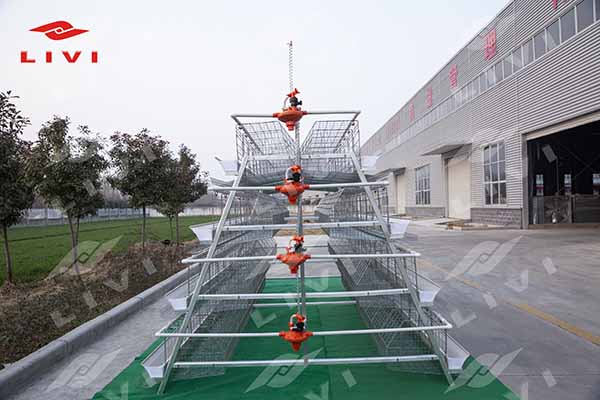
For a planned layer farm, ask suppliers to compare A-Type and H-Type proposals using the same flock target and site brief. Request a ventilation calculation, electrical loads, an outage plan, an itemized equipment list and written delivery and service responsibilities. Confirm the birds' production stage and final layout before approving capacity.
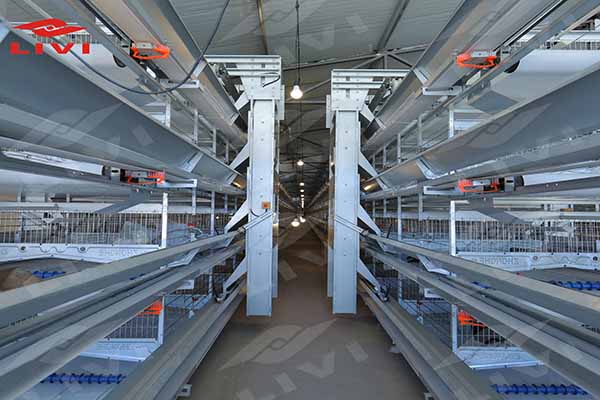
LIVI's H1200 is an H-Type Layer Cage reference for farms above 10000 birds. It is an option to evaluate, not a confirmed layout for a 30000-layer site.
How Do Site Conditions Shape the Cage and Climate Plan?
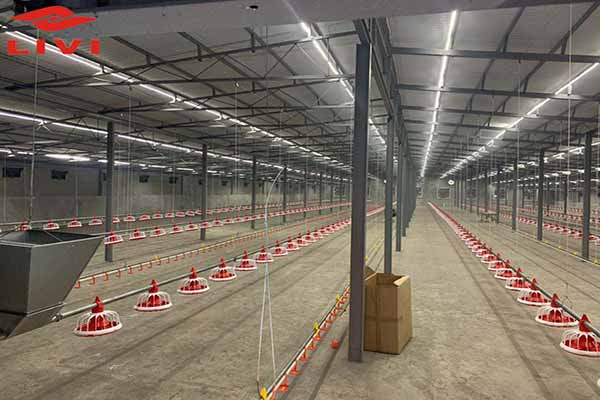
Give each supplier the house length, width, height, orientation and openings, along with available land and expansion plans. A drawing should show cage rows, aisles, air inlets, fans, egg handling and manure discharge. Check that staff can reach equipment for cleaning, inspection and repairs without obstructing airflow.
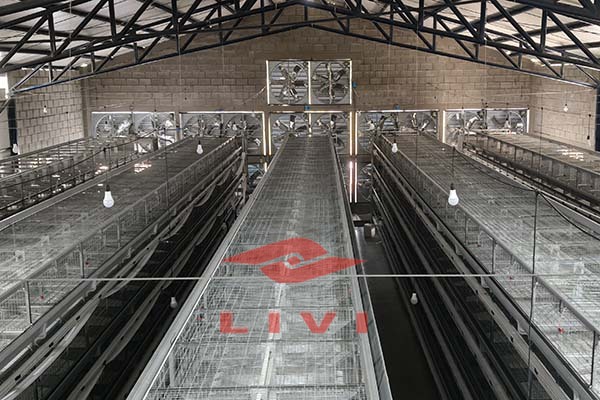
Record the site's seasonal heat, humidity, rainfall and day-to-night temperature changes. If hot conditions are a concern, ask how the proposed Ventilation System and any cooling equipment will manage them. In humid periods, assess moisture removal, drainage and corrosion exposure. In dry or dusty conditions, consider water availability and cleaning requirements. Do not assume one house design fits every location in Zambia.
A layer battery cage system must be evaluated with the house, not independently of it. The advantages and drawbacks of commercial layer housing systems vary with location, management and flock characteristics. Ask the designer to explain airflow through the proposed rows and how environmental settings will be monitored.
A-Type or H-Type?
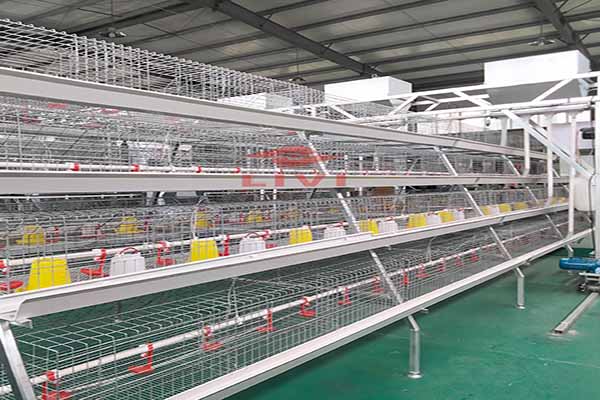
An A type layer cage may be worth comparing when the budget favors phased automation and sufficient labor is available. Confirm whether the proposed arrangement fits the house and can accommodate the intended later upgrades.
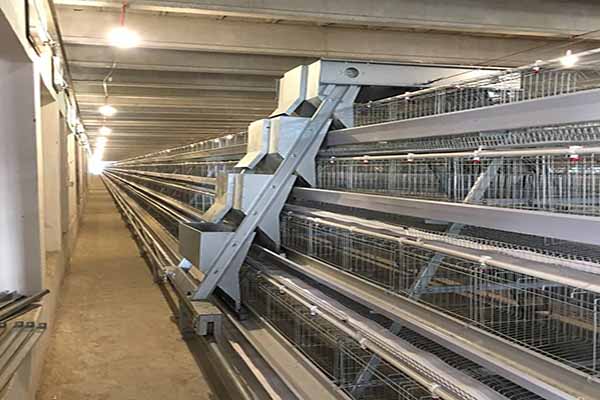
An automatic layer cage system may be appropriate when the layout, investment budget, power supply and maintenance capability support greater automation. H1200 is available in 3-12 tiers and can be considered for open, semi-open or closed houses. Tier count and actual capacity still require a site-specific drawing; more tiers are not automatically better.
How Can You Test Investment Feasibility?
Build a budget in separate lines so omitted work does not disappear behind an equipment price:
- Initial investment: house and civil works, cages, automation, ventilation, backup power, freight, insurance, installation and applicable local charges.
- Operating costs: feed, labor, water, electricity, backup fuel, maintenance and replacement parts.
- Revenue assumptions: expected saleable egg volume and selling price, using the buyer's own production and market estimates.
- Cash requirements: expenses before sales begin, financing costs where relevant, and a reserve for repairs and interruptions.
Estimate operating margin by subtracting operating costs from expected sales for the same period. Compare that margin with the initial investment, then test less favorable feed costs, egg prices and power interruptions. A simple payback calculation can divide initial investment by annual net cash flow when that cash flow is positive; it does not account for every financing or timing risk. Neither cage type guarantees profitability.
Which H1200 Interfaces Affect Climate Control and Cost?
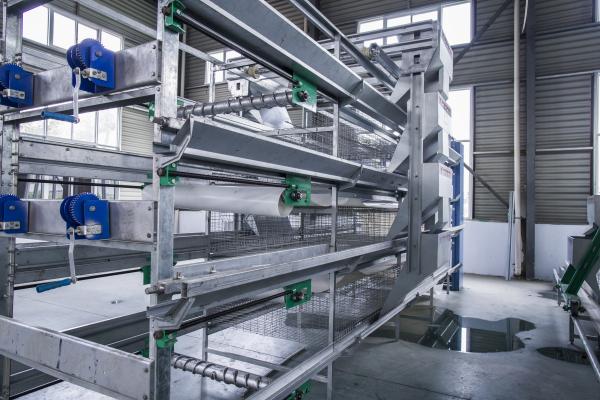
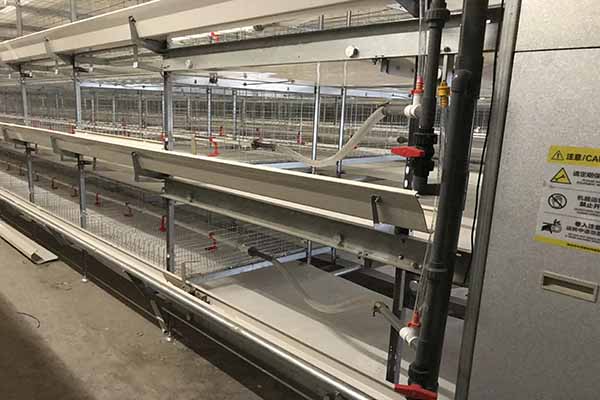
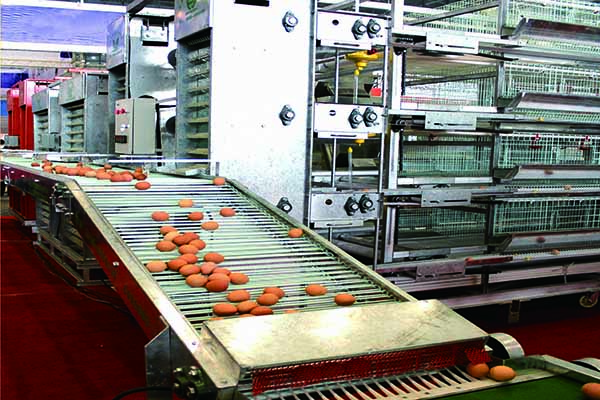
The H1200 standard equipment configuration includes a traveling feeder, Automatic Drinking, flat-belt and transverse/inclined manure removal, and an egg collection machine. Ventilation, lighting and alarms can be configured; central egg collection is an option to specify separately.
| System | H1200 reference | Site and cost check |
|---|---|---|
| Cage structure | H-Type; 3-12 tiers | Confirm house height, airflow, access and final capacity. |
| Feeding and drinking | Traveling feeder and Automatic Drinking | Check water supply, cleaning access, electrical needs and operating procedures. |
| Manure Removal System | Flat-belt and transverse/inclined removal | Plan the discharge route, belt access and manure handling. |
| Egg Collection System | Egg collection machine; central collection optional | Confirm transfer routes and precisely which equipment is included. |
| Ventilation, alarms and lighting | Configurable | Request fan selection, controls, alarm functions, backup loads and separate costs. |
Ask for the proposed ventilation calculation and total electrical load, including starting requirements. Select backup equipment with the power supplier for the agreed critical loads. Specify how alarms will be powered, who responds to an outage and how fuel and backup equipment will be maintained. Automatic equipment still requires trained operators and accessible spare parts.
Compare Climate Control and Equipment Interfaces
Send your ventilation priorities, water and power conditions, and automation goals to review how an H1200 configuration could fit your project.
What Quality and Supplier Evidence Should Buyers Request?
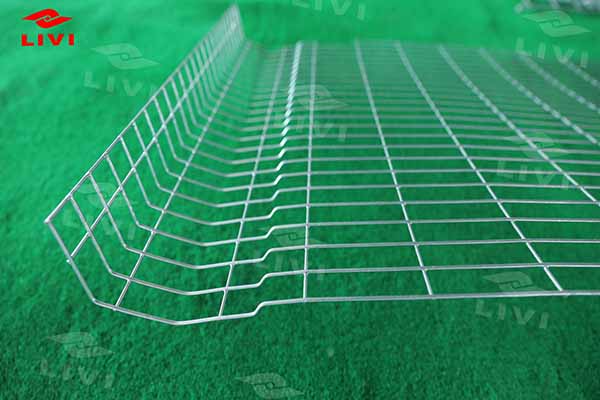
A commercial poultry equipment manufacturer should provide more than a catalog: ask for a component list, drawings, inspection procedures and evidence that the proposed systems work together. Inspect representative mesh, welds, connections and surface treatment against the written specification. Agree how defects will be assessed and corrected before shipment.
For poultry equipment factory verification, identify both the contracting seller and the actual producer. Check registration records, request a current factory video or visit, and ask which components are manufactured or sourced elsewhere. A trader or distributor can be a suitable supplier if production, accountability and service arrangements are clear.
| Screening area | Evidence to request |
|---|---|
| Production | Factory identity, current production evidence and order-specific inspection records. |
| Design | Cage layout, ventilation calculation, utility loads and maintenance access. |
| Relevant experience | References for comparable scale, climate and house type, with permission to contact them. |
| Delivery and support | Written transport boundary, installation scope, training, warranty and spare-parts process. |
If a supplier presents a poultry equipment project Ghana hosted as a reference, ask whether its climate, scale and house type are comparable to your site in Zambia. Verify the supplier's role and seek permission to contact the customer before relying on the reference.
LIVI describes welding, component production and equipment assembly operations, as well as layout and equipment-configuration support. Its installation services include remote guidance and, depending on project needs, engineer assistance. Ask for the proposed scope and cost for your site rather than assuming either service is included.
Prepare a Comparable Layer Equipment Brief
Provide your Zambia destination, flock stage, expansion plans and installation requirements so LIVI can review the scope needed for a tailored proposal.
How Should Zambia Buyers Budget Delivery and Site Readiness?
Ask every supplier to state the destination and handover point, packing method, freight and insurance responsibilities, and exclusions. Obtain separate estimates for unloading, inland transport, site labor and applicable local charges. Confirm who handles missing or damaged items and how they are documented.
Before dispatch, prepare site access, unloading equipment, protected storage, house foundations, water connections and electrical infrastructure. LIVI describes export packing support, packing lists and installation materials; check the documents and services specified in the offer.
For an H1200 proposal, verify access to adjust the Manure Belt, clean drinking lines and maintain fans. Compare it with an A-Type proposal using the same climate, labor and cost assumptions. Common mistakes include selecting tiers from bird count alone, assuming central egg collection or installation is included, and comparing unequal equipment packages.
Procurement Checklist Before Approval
- Send each supplier the same flock stage, 30000-bird target, house dimensions, site conditions, utilities and expansion plan.
- Review the layout, ventilation calculation, equipment quantities, electrical loads and itemized costs.
- Confirm the seller, producer, inspection evidence, delivery boundary and relevant references.
- Agree who supplies installation labor and tools, commissions equipment, trains operators and handles warranty claims.
- Check delivered components against the packing list; test systems, alarms and the agreed outage procedure against written acceptance criteria.
- Record settings and establish maintenance, spare-parts and emergency-response responsibilities.
These checks help a buyer compare a poultry equipment manufacturer on whether the complete system can be installed and operated at the intended Zambia site.
FAQ
1. What is included in a complete poultry equipment quotation?
A complete quotation should identify cage quantities, equipment components, drawings, packing, delivery scope and exclusions. It should also distinguish optional ventilation, controls and central egg collection from the base package. Ask for separate cost and responsibility lines for installation, training, spare parts, warranty and applicable local charges.
2. Does poultry equipment price include installation?
Installation is included only if the written offer says so. Check whether support means remote guidance or an on-site engineer, and who supplies local labor, tools and utilities. For an engineer visit, also agree who pays for travel and accommodation and what commissioning and training cover.
3. How do I choose a reliable poultry equipment manufacturer?
Verify the contracting entity and actual manufacturer, then compare production evidence, relevant references, delivery responsibilities and support against the same project brief. Request a current factory video or visit, inspection records and permission to contact comparable customers. Shortlist suppliers that can explain both their equipment and their delivery obligations.
4. How do I choose a reliable chicken cage manufacturer?
Assess the proposed cage structure and quality evidence alongside its fit with the house and connected systems. Request mesh and coating details, weld and dimensional checks, inspection records, spare-parts information and acceptance criteria. A suitable manufacturer should also explain maintenance access and the responsibilities attached to its quotation.
5. What happens to climate control during a power outage?
Powered ventilation and controls depend on the backup and alarm arrangements in the final design. Agree an outage procedure and size backup power for critical loads, including starting requirements. Confirm fuel, maintenance, alarm power and operator response with the equipment and power suppliers before commissioning the farm.
6. When should a 30000-layer farm consider A-Type instead of H-Type cages?
Consider A-Type when its proposed layout fits the house and supports a budget-sensitive or phased-automation plan with adequate labor. Compare it with H-Type using the same flock target, ventilation, power, maintenance and full-cost assumptions. Confirm each supplier's drawing and upgrade provisions before selecting either system.
TAGs: poultry equipment manufacturer, 30000-layer farm climate control in Zambia, H1200 Layer Cage, A-Type and H-Type Layer Cages, poultry equipment factory verification, chicken cage manufacturer