


Quick Answer: How Should You Use Poultry Cage Quality Inspection for Supplier Quotations in Ghana?
For a planned 30,000-layer farm in Ghana, compare quotations against the same requirements for wire, welds, corrosion protection, equipment interfaces and service. Inspect representative components and request measurements and production records before accepting a configuration. Agree how defects will be assessed and corrected, and who pays for delivery, installation and replacement parts.
Inspect Your Ghana Layer Cage Proposal
Share your 30,000-layer project brief, house drawings and supplier specifications to discuss the weld, coating and wire checks relevant to your quotation.
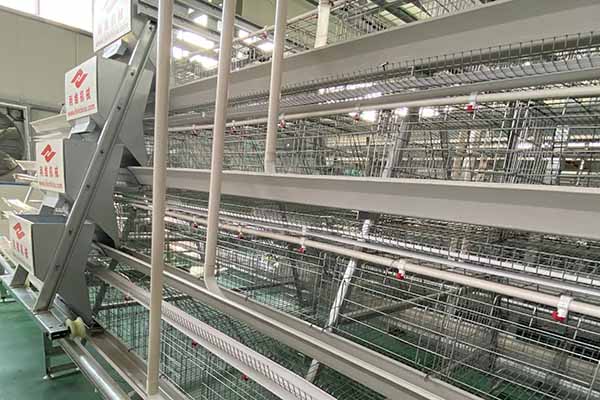
LIVI H1200 is an H-Type option to evaluate, not a confirmed site design. Its final layout, capacity, utilities and service terms depend on the house and operating plan. Compare prices only after suppliers identify equivalent equipment and responsibilities. Neither a higher price nor a coating description alone establishes better value.
What Project Inputs Determine Whether a Cage Quotation Is Suitable?
Send every supplier the same brief: Ghana destination, project type, layer stage, 30,000-bird target, expansion plan, budget and intended operating date. Include land dimensions or house drawings, house type, new-build or retrofit status, access constraints and existing equipment.
Describe the site's heat, rainfall and humidity exposure, water source and pressure, power reliability, backup, labor and automation priorities. Ask each supplier to show rows, tiers, access, egg flow and manure discharge on a drawing, with a capacity calculation and utility assumptions.
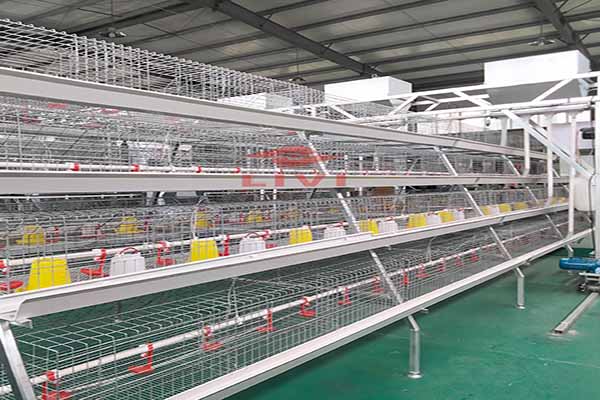
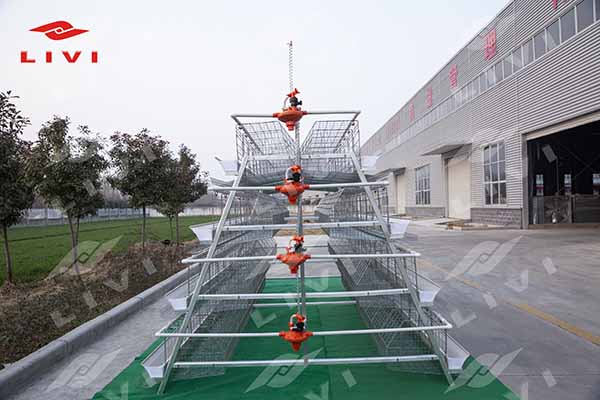
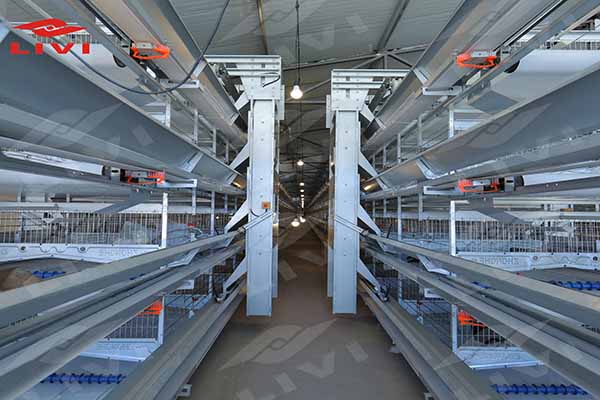
A layer battery cage system must fit the house as well as the flock target. Compare A-Type and H-Type proposals using actual layouts, maintenance access and equipment interfaces. An A-Type proposal may merit review where its arrangement fits the house and operating plan; an H-Type proposal may suit a project seeking a stacked arrangement and automation. Neither is automatically preferable. Commercial layer housing systems have trade-offs that depend on location, management and hen strain.
The H type layer cage option H1200 is listed for farms above 10,000 birds and with 3–12 tiers. Ask the supplier to confirm the arrangement, bird allocation and suitability rather than choosing a tier count from the catalog.
How Can Buyers Inspect Cage Components Against a Quotation?
Agree the sample selection, measuring method, tolerances, acceptance criteria and corrective-action process before production. These are references for named LIVI components, not universal thresholds or proof that an order meets its specification.
| Inspection point | Reference or inspection method | Evidence and decision |
|---|---|---|
| Wire diameter | The cage-mesh reference lists 2.3mm for bottom, side and partition mesh. Measure representative wires with a suitable gauge. | Compare each measurement with the quoted component. The product record also lists 2.3-3.6mm; ask which parts that range covers. |
| Welds and coating | The mesh description specifies welding before hot-dip galvanizing. Inspect joints, edges and welds for damage or gaps in coverage. | Request process and inspection records. Agree how suspected defects will be assessed; appearance alone does not establish weld strength or coating thickness. |
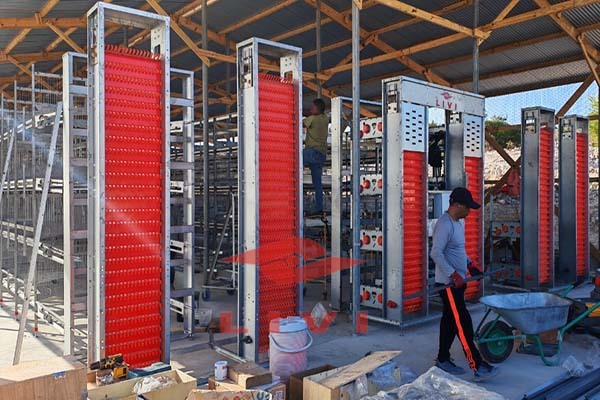
| Frame and loading | The cage upright reference specifies 2.0mm zinc-aluminum-magnesium alloy. Check dimensions and connections against the drawing. | Request load documentation for the proposed tier arrangement and clarify deviations. |
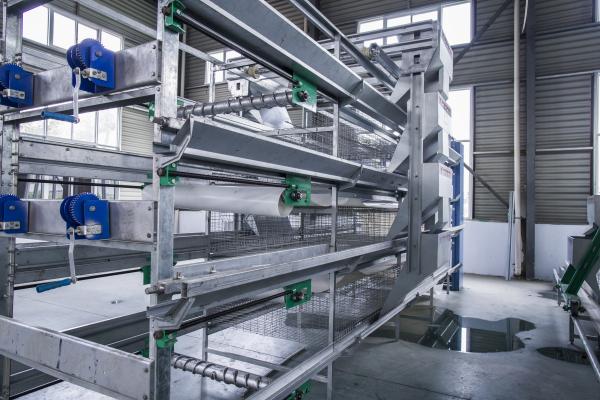
| Manure handling | One Manure Belt reference is PP, 1.2mm; the cross-inclined conveyor reference uses a 3mm PVC belt. | Confirm which belts are included and inspect alignment, supports and maintenance access. |
| System interfaces | The H1200 standard configuration lists a traveling Feeding System, Automatic Drinking, belt and cross-inclined manure removal, and an egg collector. | Confirm quantities, controls and connections. Central egg collection, ventilation and alarms require quotation-specific confirmation. |
How should you check galvanized chicken cage quality?
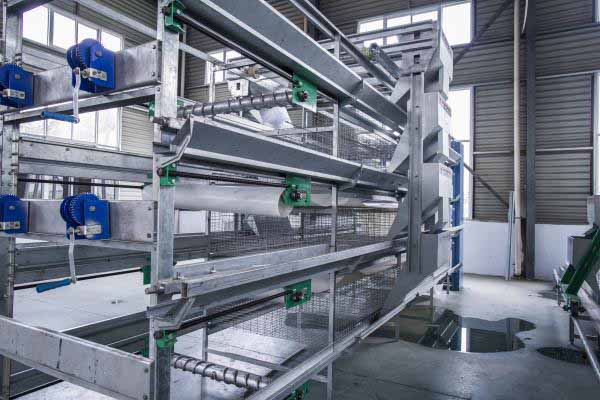
For a humid site, ask which components are hot-dip galvanized, when coating occurs relative to welding, and how joints and cut edges are protected. Inspect samples and request coating records, including any measured thickness. A bright finish alone does not establish coating performance. Agree how damaged areas will be handled before shipment and after arrival.
How should you check weld quality on layer cages?
Compare representative weld locations with the approved drawing. Look for visibly missing or irregular joints and ask the supplier to explain its inspection procedure. Record the part, location and finding; request correction or assessment against agreed criteria. Do not damage a production component as an improvised strength test.

Compare Automation and Site Requirements
Provide your water and power conditions, labor priorities and expansion plans to identify which equipment interfaces and operating responsibilities need further review.
How Should Automation and Ghana Site Risks Be Evaluated?
Compare automatic layer farming equipment by function, not by the word “automatic.” Identify what the Feeding System, Drinking System, Manure Removal System and Egg Collection System do, where each connects and what staff must inspect or maintain. Ask whether a central egg line, Climate Control System and alarms are included or separately priced.
For rainy or humid conditions, review air paths, manure removal and Drinking System leaks together. Ask for a Ventilation System proposal based on the actual house and flock, including airflow to the tiers. Ammonia monitoring is an optional Control System function in the supplied LIVI component information; confirm whether sensors and alarms are included. Plan how ventilation and water access will be maintained during a power interruption.
Automation can change labor tasks, but no saving amount is established for this farm. Compare staffing and operating hours before and after the proposed configuration, alongside electricity, maintenance and spare-parts responsibilities.
How Should Suppliers Be Evaluated?
| Review area | Evidence to request |
|---|---|
| Design | Site-specific layout, capacity calculation, utility assumptions and expansion interfaces. |
| Production quality | Material, weld, assembly and pre-shipment inspection records; sample measurements and a factory visit or remote review where available. |
| Relevant experience | Verifiable references for comparable conditions and permission to contact them where available. |
| Service | Written warranty coverage and exclusions, spare-parts arrangements, training, support channel and after-sales response. |
| Commercial scope | Itemized equipment, transport, unloading, installation, payment terms and exclusions. |
LIVI lists welding, component production and complete-equipment assembly among its production systems. It also lists layout design, installation guidance and technical support. Request records and identify which services apply to the Ghana quotation; a general capability statement is not an order-specific commitment.
If a quoted wire diameter, weld treatment or service scope cannot be matched to a component or written evidence, hold the quotation for clarification. Compare corrected proposals using the same inspection checklist and cost boundaries, rather than approving the lowest or highest headline price.
How Should Delivery and Installation Be Checked?
Before ordering, agree the delivery destination, risk-transfer point, packing list, unloading responsibility and damage-reporting procedure. LIVI states that it can provide packing lists and installation information; transport costs and responsibilities for the Ghana order must be confirmed.
On arrival, reconcile packages and components against the list. Record missing items, bent parts and coating damage before installation, and notify the responsible party under the agreed procedure. Confirm house readiness, water and electrical connections, unloading access and the installation team's scope.
Commission equipment against approved documents. Check system interfaces, controls and operator training before acceptance, and document unresolved issues and their owners.
Procurement Checklist Before Approval
- Provide the 30,000-layer brief and request comparable drawings and itemized quotations.
- Agree inspection samples, measurements, tolerances and corrective actions in writing.
- Confirm component materials, weld treatment, coating evidence and the capacity calculation.
- Identify ventilation, water, power and backup responsibilities for the site.
- Separate equipment cost from freight, unloading, installation, training, spare parts and other exclusions.
- Confirm the warranty period, technical support and claims procedure before signing.
A poultry cage quality inspection is most useful when its findings remain tied to the approved quotation, delivery checks and final acceptance record.
Discuss Your Layer Farm Inspection Priorities
Tell LIVI about your Ghana site, cage configuration and outstanding supplier questions to discuss the information needed for a project-specific assessment.
FAQ
1. What warranty and after-sales service does the supplier provide?
LIVI lists remote technical guidance, installation support and maintenance advice, but the service package for a Ghana order must be confirmed in writing. Ask which components are covered, who supplies replacement parts, and whether on-site assistance and operator training are included in the quotation.
2. What is the warranty period? What technical support and after-sales response do you provide?
The supplied H1200 record does not state a warranty period. Request the duration, start date, exclusions and claims procedure in the quotation. LIVI lists remote technical support; confirm the support channel, response commitment and escalation procedure for your contract. A response time is not the same as a repair or resolution time.
3. How should poultry cage quality inspection address corrosion in Ghana?
Inspect the specified coating process, coverage at welds and edges, and visible damage against criteria agreed with the supplier. The LIVI cage-mesh reference describes welding before hot-dip galvanizing. Request coating measurements and repair procedures; coating thickness and service life for the proposed project have not been confirmed.
4. Can the H1200 be configured for 30,000 layers?
H1200 is an H-Type option to evaluate for that target: its product record lists a recommended farm scale above 10,000 birds and 3–12 tiers. The supplier must verify house dimensions, bird allocation, ventilation and equipment layout, then provide a project-specific capacity calculation before confirming suitability.
5. How much labor could automation save on a Ghana layer farm?
A labor-saving amount or percentage cannot be established without the farm's operating plan. Compare current and proposed staffing, tasks and hours for feeding, egg collection and manure removal. Also review the power, maintenance, monitoring and backup work required by the proposed automated systems.
TAGs: poultry cage quality inspection, layer cage inspection in Ghana, galvanized chicken cage quality, layer cage weld inspection, commercial layer cage wire diameter, H1200 Layer Cage
Prepare a Comparable Equipment Request
Send your planned flock size, house dimensions, utilities, desired automation and delivery destination so the equipment scope and remaining technical questions can be reviewed.