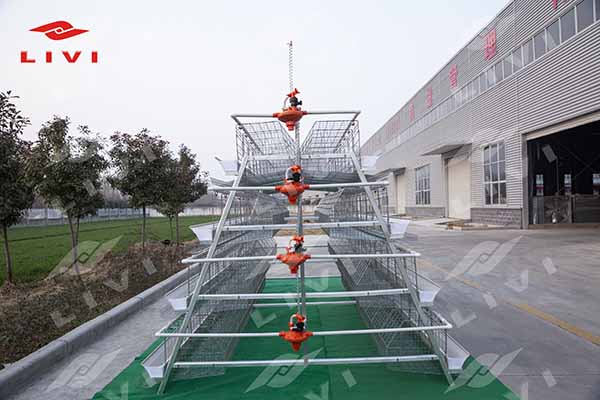



Quick Answer: How Should You Assess Automatic Layer Cage System Price and Feeding Costs in Zimbabwe?
Assess the automatic layer cage system price and feeding costs in Zimbabwe as part of a whole-farm budget, not as an equipment-only purchase. Compare manual feeding, Automatic Feeding and a proposed silo-and-line arrangement using the same project period, local feed prices and farm measurements. Include labor, feed losses, electricity, maintenance and replacement alongside the installed equipment cost.
Build a Zimbabwe Layer Farm Investment Brief
Share your planned flock, site details and feeding priorities to discuss the equipment scope and local cost inputs for your budget.
Then add land and site works, the poultry house, transport, clearance, installation, utilities, birds and pre-production expenses. Test whether the project can fund those costs before egg sales begin. Automatic Feeding may change labor and feed handling, but the financial result depends on what actually changes on the farm; neither savings nor payback should be assumed from the equipment description.
An automatic layer cage system quotation is most useful when it identifies what is included, where delivery ends and which work remains the buyer’s responsibility. The following method helps investors build that boundary before comparing suppliers.
Which Feeding Option Fits the Farm’s Labor and Feed Budget?
Start with the feeding process rather than the machinery label. Trace feed from delivery and storage through transfer, distribution and trough cleaning. For each task, record who performs it, how long it takes and whether it creates a paid expense that could actually change. A faster task may free staff for other work without reducing payroll.

For an existing farm, time receiving, carrying, loading, distributing, inspection and cleaning under the current method. After a change, measure the same tasks again, including time spent monitoring equipment and responding to interruptions. For a new farm, ask suppliers and local operators to identify the tasks each proposed arrangement would require, then use the resulting estimates as planning inputs rather than proven savings.
Record opening and closing feed inventory, deliveries, feed issued and recoverable or discarded spillage. Weigh losses consistently at unloading, storage, transfer points and troughs. Feed issued minus collected waste is not automatically bird intake: uncollected losses, stock measurement errors and feed remaining in equipment can affect the balance.
Compare periods with similar flock size, age, feed and management where practical. Record bird-days, saleable eggs, feeder settings and outages alongside the measurements. These details help distinguish an equipment effect from changes in the flock or routine.
What belongs in the whole-farm budget?
Use the table to reconcile a supplier’s poultry cage system quotation with local costs. Mark each item as included, excluded or requiring confirmation in the written proposal.

| Cost item | Buyer input | Budget stage | Quotation boundary |
|---|---|---|---|
| Land and site works | Purchase or lease, grading, access, fencing and drainage | Initial investment | Confirm local responsibility |
| Poultry house | Construction, foundations and storage | Initial investment | Check building scope and exclusions |
| Cages and feeding | Layout, feeder, silo and line requirements | Initial investment | Itemize equipment and quantities |
| Farm systems | Drinking System, egg and manure handling, Climate Control System | Initial investment | Confirm each supplied component |
| Utilities and biosecurity | Water storage and treatment, electrical connections, backup power and site controls | Initial investment | Separate supplier and local works |
| Delivery and installation | Freight, clearance, unloading, labor and commissioning | Initial investment | Match trade terms and service scope |
| Birds and pre-production | Bird purchase, rearing where applicable, feed and health inputs before sales | Pre-production | Budget separately from equipment |
| Farm operation | Feed, wages, water, electricity and veterinary inputs | Recurring | Use local prices and records |
| Maintenance and replacement | Parts, service labor and equipment upgrades | Ongoing and long-term | Confirm parts prices and service terms |
Keep an operating cash reserve separate from the capital budget. A supplier’s equipment price may be an important input, but it does not establish the cost of construction, local utilities or keeping the flock until sales begin.
How Do Feeding Configurations Compare Before Investment?
The options below are planning alternatives, not a statement that every configuration is available with a particular model. Verify component quantities, capacities, electrical loads and prices in each project quotation. Compare each alternative over the same period and include the same categories of expenditure.
Compare Feeding Options for Your Layer Farm
Provide your current feeding method, labor records and silo requirements to discuss a comparable configuration and quotation scope for your project.
| Feeding option and stage | Parameters to verify | Potential advantage | Limitation and lifecycle cost | Application condition and selection rule |
|---|---|---|---|---|
| Manual feeding at initial operation | Staff hours, storage method, distribution route and measured spillage | Direct control over feeding tasks | Handling and supervision require labor; storage and waste still have costs | Consider if staffing and handling capacity meet the farm’s operating needs |
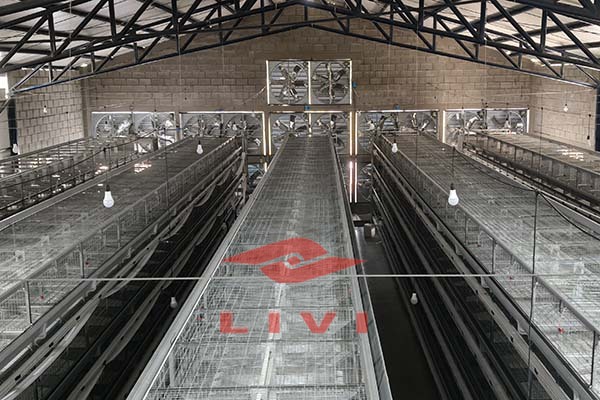
| Automatic Feeding without a silo, subject to supplier design | Feeder, loading method, power, installation and price | May reduce distribution work | Requires inspection, power, maintenance and replacement planning | Consider if measured distribution work supports the investment and feed loading is practical |
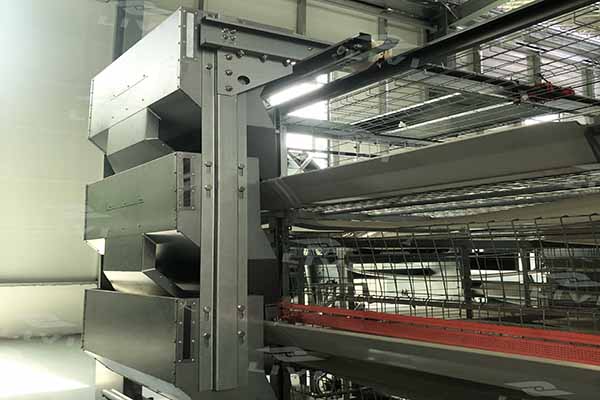
| Automatic Feeding with a proposed silo and feed line | Silo capacity, delivery access, line layout, foundations, power and interfaces | May reduce some storage-to-feeder handling | Adds equipment, construction, cleaning and maintenance responsibilities | Consider if delivery arrangements, space and measured handling justify the additional scope |
A silo should be assessed as a storage and transfer investment, not simply as an automatic saving. Ask how feed will arrive, how the silo will be filled, where the line connects to the feeder and how staff will inspect and clean the arrangement. A longer or more complex transfer route may change both installation work and maintenance access.
When reviewing a layer battery cage system, request a drawing showing the feeding route and interfaces. H1200 can be included as an equipment option for technical review; the supplier should confirm its project-specific configuration and compatibility rather than treating the model name as proof of farm fit.
Select the option that meets the farm’s operational requirements and funding limits after its measured or documented costs are compared. If the automatic arrangement has a higher installed cost, its potential value must be tested against actual changes in feed, paid labor and other cash expenses—not against the number of tasks it automates.
What Must Zimbabwe Buyers Include in Landed Cost and Site Readiness?
For the poultry equipment import cost from China, start at the delivery point named in each quotation. Add freight, insurance, handling, clearance, applicable duties and taxes, inland transport and unloading only where they are outside that quotation. Ask a freight provider and customs adviser to confirm the route, classification and current charges for the shipment. Compare suppliers at the same Zimbabwe farm delivery boundary to avoid counting any charge twice.

The poultry equipment installation cost should also have a written boundary. Obtain local estimates for installation labor, lifting equipment, electrical connections, commissioning, training and any engineer travel. Confirm who supplies tools and who resolves defects or missing components. LIVI states that it can provide packing lists, installation documents and equipment instructions; the actual installation and delivery responsibilities should be agreed for the project.
Check the proposed site’s seasonal temperature, humidity and rainfall, as well as exposure around the feed storage location. Give the designer house dimensions, delivery-vehicle access and the intended silo position so that foundations, feed transfer and maintenance access can be assessed together.
For electricity, confirm the available supply, connection cost and site outage history. Ask an electrical professional to assess starting and running loads for the feeding equipment and other critical farm systems before selecting backup power. Include connections, fuel and maintenance in the budget. Confirm the water source, quality, storage and supply needed for the wider farm as well.
Ask local authorities and advisers which permits, welfare requirements and standards apply to the site and proposed equipment. Check installer availability, local labor rates and how replacement parts would reach the farm. These inputs affect both the initial quotation comparison and the farm’s ability to operate after commissioning.
How Can Farm Records Test Operating Cost and Payback?
Choose a reporting period and a consistent cost boundary. Record feed used at the applicable local feed cost, paid labor, electricity, water, veterinary inputs and routine maintenance. Identify inventory adjustments and losses separately, but do not add the cost of discarded feed a second time if it is already included in feed used.
Use these measures to compare the farm’s actual operating records:
- Average birds present = total bird-days ÷ days in the period.
- Operating cost per bird = total period operating cost ÷ average birds present.
- Operating cost per saleable egg = the same period operating cost ÷ saleable eggs.
State whether the figures include depreciation, financing, replacements or pre-production expenses. Cost per bird is meaningful only with its period stated; cost per egg should use saleable eggs rather than assuming every egg produced is sold. Neither figure alone establishes profit: compare actual egg receipts with the full costs and cash obligations selected for the analysis.
Compare equipment and whole-project recovery
To evaluate a change from manual to Automatic Feeding, place the manual arrangement and the proposed automatic arrangement in separate columns. For each, enter the installed feeding cost and the same period’s feed, paid labor, power and maintenance costs. Add dated replacement expenditure where relevant. Use measurements after installation to test earlier estimates; count reassigned staff time separately unless the farm assigns it an explicit economic value.
The equipment-level comparison asks whether cumulative incremental cash benefits from the change recover its incremental installed cost. Include extra power, maintenance and replacement payments in those cash flows. If the incremental benefit is not positive, there is no equipment payback on that basis.
The whole-project comparison starts at the first project expenditure. Put land, house construction, equipment, delivery, installation, birds and pre-production spending on a dated timeline. Add egg receipts and operating payments as they occur. Include construction, shipping, installation, rearing where applicable and the time until production. Whole-project payback occurs only when cumulative net cash flow recovers the relevant outlays.
Prepare a Quote Scope for Your Project
Send your planned layer count, house dimensions, power and water conditions, delivery location and automation needs to request an itemized equipment proposal.
Test the budget against changes in local feed prices, egg receipts, labor, outages and replacement costs. Document each planning assumption and update it with actual records. This separates a feeder investment decision from the broader question of whether the complete farm can fund itself.
FAQ
1. How much does it cost to import poultry equipment from China?
The cost depends on the quoted delivery point, shipment and destination. Add freight, insurance, handling, clearance, applicable duties and taxes, inland transport and unloading only when they are outside the supplier’s quotation. Ask a freight provider and customs adviser to confirm the route, classification and current charges, then compare proposals at the same Zimbabwe farm boundary.
2. Does Automatic Feeding eliminate feeding labor?
No. Operators may still need to load or monitor feed, inspect the equipment, clean and respond to interruptions. Time each task under the existing and proposed arrangements, including maintenance and troubleshooting. Separate a genuine reduction in paid labor expenditure from hours reassigned to other farm work when evaluating the investment.
3. How can a feed silo’s effect on waste be checked?
Measure feed movements and recoverable or discarded spillage over comparable operating periods. Record deliveries, opening and closing inventory and feed issued, then inspect losses at unloading, storage, transfer points and troughs. Keep weighing methods consistent and note changes in flock age, feed and management, because these can affect the comparison.
4. What backup power should be budgeted for an automatic Feeding System?
Budget backup power for the farm loads and outage response required, not for the feeder alone. Ask an electrical professional to assess starting and running loads, critical equipment, connections and the proposed response to an outage. Include the generator or other selected supply, fuel, installation and ongoing maintenance in the project budget.
5. What does the automatic layer cage system price and feeding costs in Zimbabwe comparison need before a quotation?
Provide the planned layer count, site or house dimensions, Zimbabwe destination, feeding and automation requirements, available utilities and existing equipment. Request itemized equipment, delivery, installation and spare-parts responsibilities. Use those details with local construction, feed and operating costs to compare proposals on the same project boundary.
TAGs: automatic layer cage system price, layer farm feeding costs in Zimbabwe, Automatic Feeding for layer farms, feed silo and feed line costs, poultry equipment installation cost, poultry equipment import cost from China