


A Type vs H Type Layer Cages in Ghana: Which Is Better for 20,000 Layers?
Choosing between A type vs H type layer cages in Ghana requires more than comparing the purchase price of the cages. A poultry investor must also evaluate chicken-house construction, stocking density, electricity reliability, ventilation, daily labor, manure disposal, egg collection and future expansion.
Both cage systems can support a profitable 20,000-layer project. However, they create different investment structures and management requirements. This comparison explains which system may be more appropriate for different farm conditions in Ghana.
Table of Contents
- What is the main difference between A type and H type cages?
- Is an A type cage system suitable for 20,000 layers?
- When should a farm choose H type layer cages?
- Which system has the lower total cost?
- How do Ghana’s climate and electricity affect the choice?
- Which configuration is recommended?
- Frequently asked questions

What Is the Main Difference Between A Type and H Type Layer Cages?
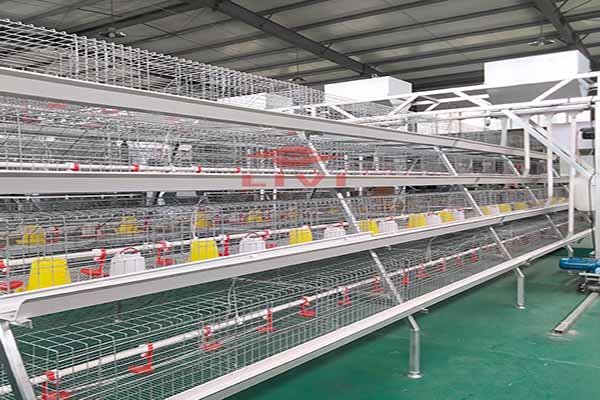
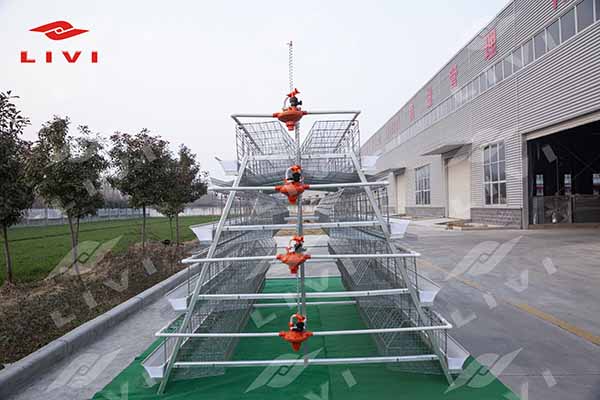
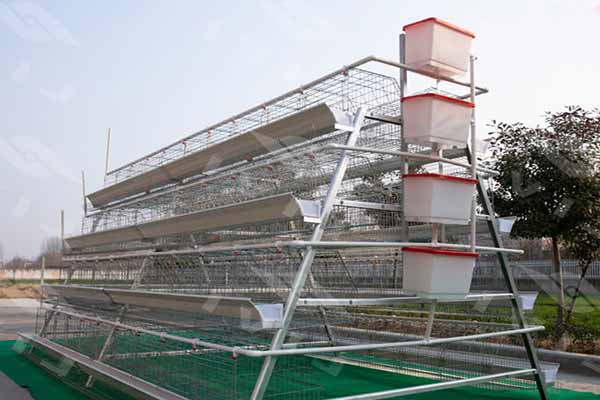
A type cages use a stepped arrangement. Each upper cage tier is positioned inward, creating an open cage structure with relatively good airflow. Depending on the project design, manure may fall into a manure pit or be removed by scrapers or conveyor belts.
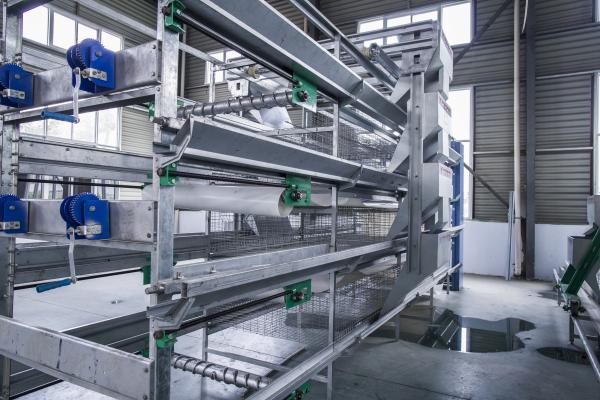
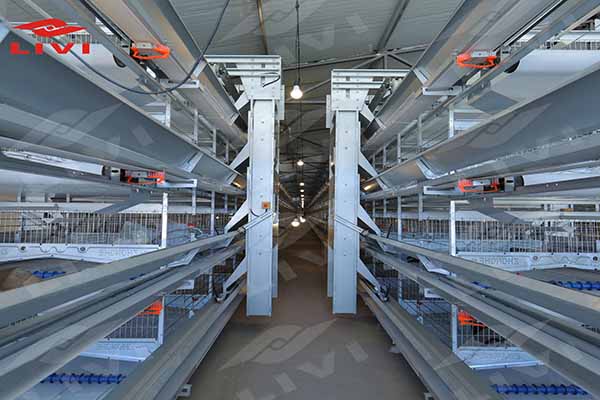
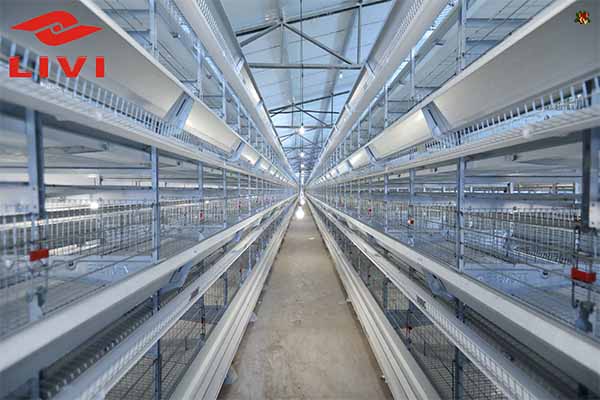
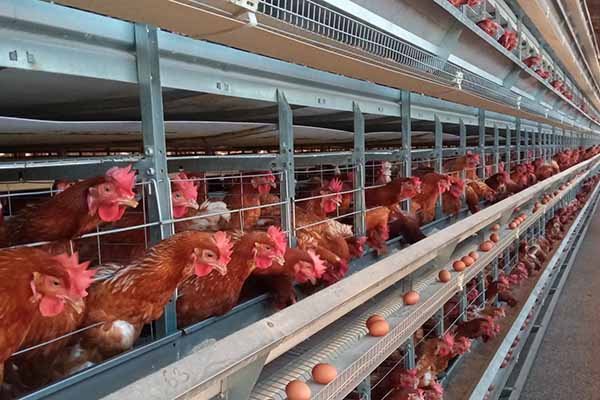
H type cages are installed in vertically stacked rows. Every tier can be equipped with an independent manure belt, feeding line, nipple drinking system and egg collection belt. The stacked design accommodates more birds within the same chicken-house area.
| Comparison Factor | A Type Layer Cages | H Type Layer Cages |
|---|---|---|
| Cage arrangement | Stepped cage rows | Vertically stacked cage rows |
| Initial equipment cost | Generally lower | Generally higher |
| Stocking density | Moderate | High |
| Land requirement | More chicken-house area | Less chicken-house area |
| Automation level | Manual, semi-automatic or automatic | Usually highly or fully automatic |
| Manure removal | Manure pit, scraper or optional belt | Manure belt under each tier |
| Ventilation requirement | Natural and mechanical ventilation can be combined | Engineered mechanical ventilation is normally required |
| Best application | Medium farms with controlled investment | Intensive farms focused on automation and expansion |
Is an A Type Cage System Suitable for 20,000 Layers?
Yes. A type layer cages can be an economical and manageable solution for a 20,000-bird project. They are especially suitable for farm owners entering commercial egg production in stages.
A typical project can use three-tier or four-tier cage configurations. The final number of cage sets depends on cage capacity, stocking density, house length, aisle width and the number of cage rows.
Farmers considering this option can review the A type layer battery cage for 5,000–30,000 chickens to understand the applicable farm scale and available equipment configuration.
Why do some Ghanaian investors prefer A type cages?
- Lower first-stage equipment investment
- Simple installation and daily maintenance
- Open cage structure with good air circulation
- Flexible selection of manual or automatic equipment
- Suitable for farms with adequate land
- Lower dependence on complex control systems
For farms in areas with unstable grid power, an A type system can initially use automatic nipple drinking and mechanical feeding while retaining manual egg collection or simpler manure-removal methods.
The main limitation is land utilization. A type cages usually require wider spacing and a larger poultry-house footprint to accommodate 20,000 layers. The investor may therefore spend more on foundations, roofing, internal roads and ventilation openings.
When Should a Farm Choose H Type Layer Cages?
An H type system is more appropriate when the 20,000-layer farm is planned as an intensive, automation-oriented commercial project. Its vertically stacked configuration provides a higher bird capacity per square metre and can reduce the required poultry-house footprint.
A complete H type layer battery cage system is commonly selected for large farms, but it can also be configured for a 20,000-layer project when the owner prioritizes labor reduction, hygiene and future expansion.
What equipment can be included in an H type system?
- Feed silo and feed conveying line
- Automatic feeding trolley
- Nipple drinking lines with pressure regulation
- Manure belts installed under every cage tier
- Automatic longitudinal egg collection
- Central egg conveyor
- Exhaust fans and air inlets
- Cooling pads for hot periods
- Environmental sensors and control cabinet
- Lighting and emergency alarm equipment
This configuration reduces repetitive manual work. Feeding can be distributed consistently, manure can be removed on a regular schedule and eggs can be transported directly to a central collection point.
Which System Has a Lower Total Cost for 20,000 Layers?
A type cages normally have a lower equipment quotation. However, the cage price is only one component of the total investment.
The farm owner should calculate the total installed cost, including cages, poultry-house construction, electrical work, water storage, ventilation, feed storage, transport, installation and backup power.
| Cost Category | A Type Cost Tendency | H Type Cost Tendency |
|---|---|---|
| Cage equipment | Lower | Higher |
| Chicken-house area | Larger | Smaller |
| Installation complexity | Lower | Higher |
| Daily labor | Moderate to high | Low after automation |
| Manure handling labor | Higher without belt removal | Lower with automatic belts |
| Egg collection labor | Depends on automation level | Usually low |
| Power backup investment | Recommended | Essential for intensive automation |
| Future expansion efficiency | Moderate | High |
An A type project may save money at the purchasing stage, but it can require more workers and a larger building. An H type project requires more capital at the beginning, but it can reduce recurring labor costs and improve the use of available land.
How Do Ghana’s Climate and Electricity Affect the Cage Choice?
Heat and humidity are important considerations for poultry projects in Ghana. High internal temperatures can reduce feed intake, affect laying performance and increase flock stress.
Ventilation requirements for A type cages
The stepped structure allows more open airflow around the birds. Nevertheless, a 20,000-layer house should not depend only on natural ventilation. Exhaust fans, circulation fans, suitable side-wall openings and an insulated roof may still be required.
Ventilation requirements for H type cages
H type cages place more birds in a smaller building volume. Fan capacity, air speed, inlet position and cooling-pad area must therefore be calculated according to the number of birds, house dimensions and local temperature.
Backup electricity is particularly important for H type systems because ventilation, feeding, manure belts and egg conveyors use electric motors. A generator and emergency operating procedure should be included in the farm plan.
Which Cage Configuration Is Recommended for 20,000 Layers?
Option 1: Budget-controlled A type project
- Three-tier or four-tier A type cages
- Automatic nipple drinking
- Automatic or trolley feeding
- Scraper or belt manure removal
- Manual or semi-automatic egg collection
- Mechanical fans combined with side ventilation
- Reserved space for future automation
This option is appropriate when land is available and the farm owner wants to control initial capital expenditure.
Option 2: Efficiency-focused H type project
- Four-tier or five-tier H type cages
- Automatic feeding and drinking
- Manure belts under every tier
- Automatic egg collection
- Central environmental control
- Fans, air inlets and cooling pads
- Backup generator connection
- Expansion-ready house arrangement
This option is more suitable for investors focused on land efficiency, hygiene, reduced labor and long-term commercial expansion.
How Should a Ghanaian Investor Make the Final Decision?
Before selecting a cage system, the investor should prepare a complete project plan covering:
- Available land dimensions
- Construction budget
- Target daily egg production
- Local labor availability and wages
- Grid electricity reliability
- Generator and fuel costs
- Water source and storage capacity
- Feed storage and delivery access
- Manure disposal or fertilizer sales
- Expansion target for the next three to five years
For a first-stage commercial farm with adequate land, A type cages can provide a balanced and economical solution. For an investor planning a highly automated operation or future expansion to 30,000 layers and above, H type cages normally provide better long-term efficiency.
Frequently Asked Questions
How many cage sets are needed for 20,000 layers?
The number depends on the cage model, tiers, doors, stocking density and birds accommodated per set. A final quantity should be calculated after confirming the poultry-house dimensions and required aisle arrangement.
Can A type layer cages be fully automatic?
Yes. A type cages can be connected to automatic feeding, drinking, manure removal and egg collection equipment. Many investors choose partial automation initially and upgrade the system later.
Does an H type system consume more electricity?
It usually operates more motors and depends more heavily on mechanical ventilation. Electricity consumption varies according to fan quantity, cage rows, feeding frequency, manure-cleaning schedules and egg collection time.
Which system requires fewer workers?
A fully automatic H type system generally requires fewer workers for feeding, manure removal and egg collection. A type labor requirements depend on how much automation is installed.
Which cage system is easier to expand?
A type farms can expand by constructing additional houses when sufficient land is available. H type farms can achieve greater capacity within a smaller footprint and can be integrated with centralized feeding, egg and manure systems.
What information is needed for an accurate quotation?
The equipment supplier normally needs the bird capacity, land dimensions, preferred cage system, automation level, poultry-house status, local voltage, destination port and future expansion plan.
Get a Customized 20,000-Layer Farm Comparison
Cage price alone cannot determine which solution will deliver the best return. Livi Machinery can compare A type and H type layouts according to your land, budget, electricity conditions and expansion plan in Ghana.
Submit your available land dimensions and expected automation level to receive a customized poultry-house layout, equipment list, ventilation recommendation and project quotation.
Request a Free Farm Design and Quotation