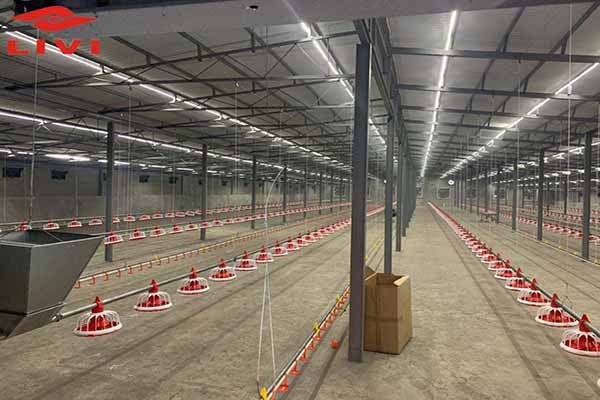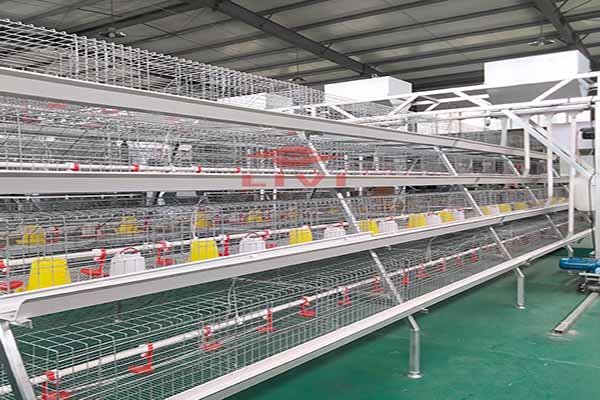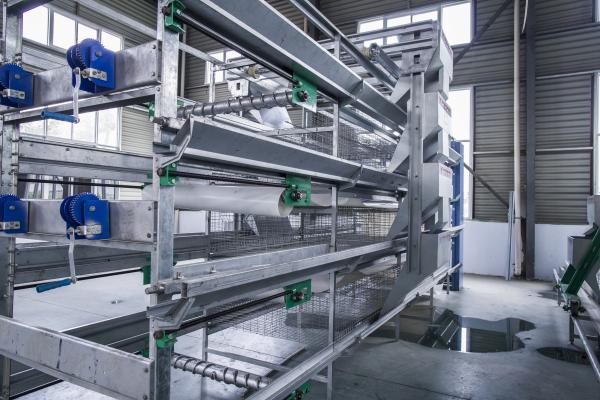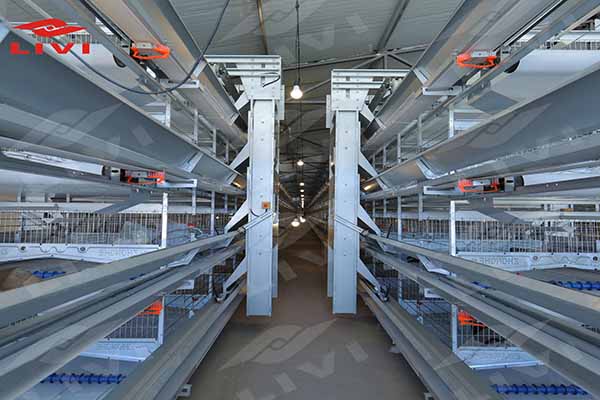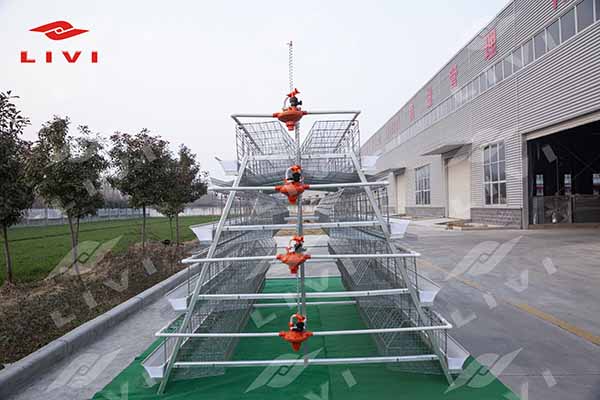



To build a 200,000 layers poultry farm in Uganda, the most recommended solution is to use a fully automatic H type layer cage system with automatic feeding, drinking, manure removal, egg collection, ventilation, cooling, lighting, and environmental control systems. For this capacity, the farm should not be designed as one oversized chicken house. A more practical layout is to divide the project into 4 to 5 layer houses, with each house raising about 40,000 to 50,000 laying hens.
For large commercial egg farms, the H type layer battery cage system is usually more suitable than A type cages because it provides higher stocking density, better automation compatibility, easier manure handling, and more efficient egg collection.
What Is the Best Design for a 200,000 Layers Farm in Uganda?
For a 200,000 layers poultry farm in Uganda, Livi Machinery usually recommends a fully automatic H type layer cage system. The complete project should include chicken house layout design, cage system, automatic feeding system, nipple drinking system, manure removal system, egg collection system, ventilation fans, cooling pads, lighting, feed silos, and electrical control cabinets.
| Item | Recommended Design |
|---|---|
| Farm type | Commercial layer poultry farm |
| Country | Uganda |
| Capacity | 200,000 laying hens |
| Cage system | H type layer battery cage |
| Automation level | Fully automatic |
| Suggested house quantity | 4 houses × 50,000 birds or 5 houses × 40,000 birds |
| Main systems | Feeding, drinking, manure removal, egg collection, ventilation, cooling, lighting |
| Suitable customer | Large egg farm investor or commercial poultry enterprise |
This design helps investors improve land use, reduce labor requirements, improve egg collection efficiency, and build a scalable commercial egg production farm in Uganda.
Step 1: Plan the Whole Poultry Farm Layout First
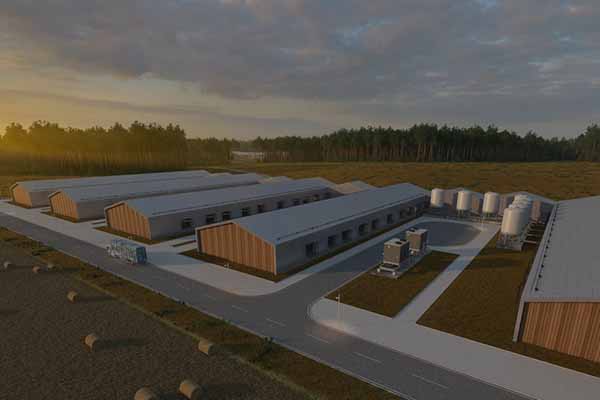
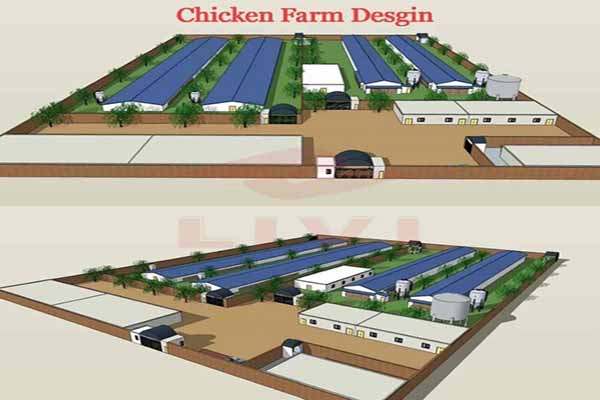
For a 200,000 layers project, the first step is not simply buying cages. The first step is to design the whole farm layout according to land size, chicken house direction, ventilation requirements, feed storage, egg collection route, manure discharge area, road access, water supply, and future expansion.
A practical farm layout can be divided into several functional areas:
- Layer chicken houses
- Feed storage area
- Egg collection and storage area
- Manure discharge area
- Equipment control room
- Worker operation area
- Vehicle access road
- Future expansion area
For Uganda, many investors prefer a 4-house or 5-house design because it balances construction cost, daily management, ventilation control, and future expansion.
| Design Option | Birds Per House | Number of Houses | Suitable Situation |
|---|---|---|---|
| Option A | 50,000 layers | 4 houses | Suitable for compact large-scale farms |
| Option B | 40,000 layers | 5 houses | Easier flock and ventilation management |
| Option C | 25,000 layers | 8 houses | Suitable for phased investment and later expansion |
Step 2: Choose H Type Layer Cages for Large Capacity
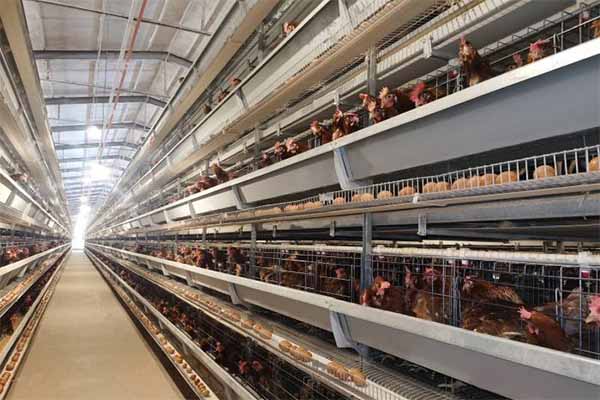
For 200,000 laying hens, H type layer cages are more suitable than A type cages. A type cages can be used for small and medium farms, but for a large commercial layer farm, H type cages save more space and are easier to connect with automatic feeding, manure removal, and egg collection systems.
A fully automatic H type chicken cage system for more than 30,000 chickens is especially suitable for investors who want to build a modern farm with lower labor cost and higher management efficiency.
| Cage Type | Suitable Capacity | Main Advantage | Recommendation for 200,000 Layers |
|---|---|---|---|
| A type layer cage | 5,000–30,000 birds | Lower initial investment | Not ideal for very large farms |
| H type layer cage | 30,000–500,000 birds | High density and full automation | Highly recommended |
| Deep litter system | Small or special farms | Lower equipment input | Not suitable for 200,000 layers |
For a 200,000 layers project, H type cages can help reduce land use, improve feeding uniformity, simplify egg collection, and make the chicken house easier to manage.
Step 3: Calculate the Cage Quantity
If using a 4-tier 4-door H type layer cage with 192 birds per set, the basic cage quantity calculation is:
200,000 layers ÷ 192 birds per set = about 1,042 sets
In actual farm design, the final number of cage sets may be adjusted according to the chicken house size, row arrangement, aisle width, egg belt direction, manure belt direction, and reserved capacity.
| Cage Model | Capacity Per Set | Estimated Quantity for 200,000 Layers |
|---|---|---|
| 4-tier H type layer cage | 192 birds/set | About 1,042 sets |
| 5-tier H type layer cage | Higher density | Depends on house height |
| 8-tier H type layer cage | Very high density | Suitable for high chicken houses |
| A type layer cage | Lower density | Not recommended for this capacity |
For Uganda, if the investor wants better ventilation and easier management, 4-tier or 5-tier H type cages are commonly recommended. If the chicken house height is sufficient and the farm wants maximum capacity per house, a higher-tier H type cage system can also be considered.
Step 4: Design the Chicken House Layout
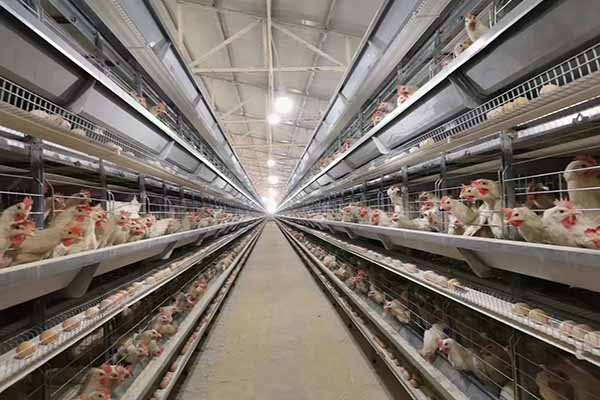
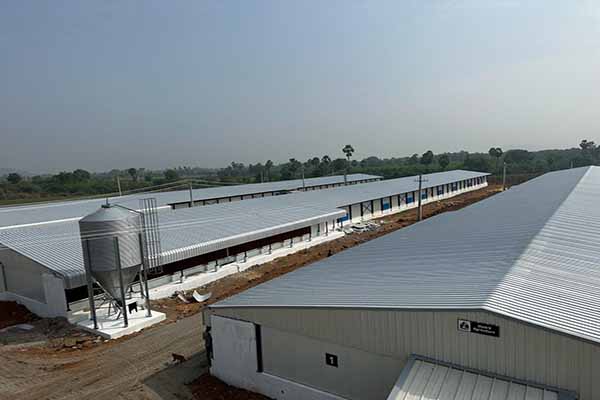
The chicken house layout must match the cage rows, feeding system, manure belt, egg belt, ventilation fans, cooling pads, and worker inspection aisles. If the house is too narrow, too short, or too low, it may limit automation and ventilation performance.
A typical 200,000 layers poultry farm in Uganda can use the following layout concept:
| House Plan | Capacity | Layout Concept |
|---|---|---|
| 4-house plan | 50,000 birds per house | Suitable for full automation and compact land use |
| 5-house plan | 40,000 birds per house | Easier to control temperature and flock management |
| Feed area | Central feed silo and conveyor | Reduces manual feed transport |
| Egg area | Central egg collection room | Easier egg packing and storage |
| Manure area | Outside manure discharge zone | Keeps clean and dirty areas separated |
The final chicken house size should be calculated according to the selected cage model. Before construction, the investor should provide the land size, planned house size, local temperature conditions, and target automation level.
Step 5: Configure the Automatic Equipment System
A 200,000 layers farm cannot rely on manual feeding, manual manure cleaning, or manual egg collection. At this scale, automation directly affects labor cost, production stability, and daily management efficiency.
A complete automatic layer farm equipment system should include:
| Equipment System | Main Function | Recommendation |
|---|---|---|
| H type layer cage | Houses laying hens | Main system for high-density farming |
| Automatic feeding system | Delivers feed evenly | Feed silo + conveyor + feeding trolley |
| Nipple drinking system | Provides clean drinking water | Nipples, regulators, water line, filter |
| Manure removal system | Removes manure regularly | Belt manure removal system |
| Egg collection system | Collects eggs automatically | Egg belt + elevator + central conveyor |
| Ventilation system | Controls air quality | Exhaust fans and air inlets |
| Cooling pad system | Reduces heat stress | Important for hot seasons |
| Lighting system | Supports laying performance | Uniform light control |
| Control cabinet | Manages equipment operation | Centralized electrical control |
A modern automatic poultry cage system helps reduce daily labor, improve egg collection speed, keep the house cleaner, and make the farm easier to manage.
Step 6: Pay Attention to Ventilation and Cooling in Uganda
Uganda has warm conditions in many farming areas, so ventilation and cooling must be planned carefully. Poor ventilation can cause heat stress, wet manure, poor air quality, higher disease risk, and lower egg production.
For H type cage houses, ventilation should not only move air near the roof. Airflow must reach the bird level because the birds are raised in multiple vertical tiers.
A good ventilation and cooling design should include:
- Exhaust fans for removing heat and moisture
- Air inlets for fresh air distribution
- Cooling pads for hot weather
- Temperature and humidity sensors
- Proper house sealing
- Emergency backup power
- Reasonable distance between houses
For a 200,000 layers farm, the ventilation system should be designed together with the cage layout. If the farm expands later, the power supply and cooling system should also reserve enough capacity.
Step 7: Understand the Main Cost Factors
The cost of building a 200,000 layers poultry farm in Uganda depends on many factors. Investors should not only compare cage price. A lower cage price may lead to higher labor cost, poor ventilation, difficult installation, or short service life.
| Cost Factor | What It Affects |
|---|---|
| Cage type | Stocking density, service life, house layout |
| Automation level | Labor cost and operation efficiency |
| Chicken house structure | Construction cost and ventilation design |
| Manure removal method | Cleanliness and disease control |
| Egg collection method | Egg damage rate and labor requirement |
| Shipping distance | Container quantity and freight cost |
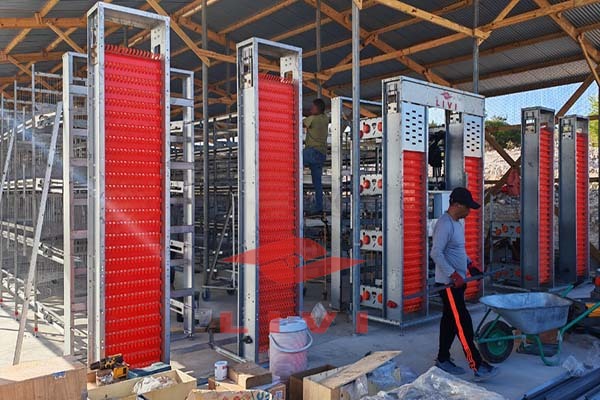
| Installation support | Project speed and equipment performance |
| Future expansion plan | Long-term investment efficiency |
For an accurate equipment quotation, investors should prepare basic information such as country, chicken quantity, land size, chicken house size, layer project plan, and required automation level.
Step 8: Evaluate Labor Saving and ROI
A 200,000 layers poultry farm is a large commercial egg production project. The return on investment depends on egg price, feed cost, pullet quality, mortality rate, labor cost, farm management level, and local market demand.
Automation helps improve ROI in several ways:
- Reduces workers needed for daily feeding
- Reduces workers needed for egg collection
- Improves feed distribution uniformity
- Reduces egg damage during collection
- Removes manure more regularly
- Improves house cleanliness
- Makes farm operation more standardized
- Supports long-term expansion
For a large farm, automation is not only used to save labor. More importantly, it helps build a stable production system that can run every day with predictable management.
Step 9: Avoid Common Mistakes Before Construction
Many poultry farm investors make mistakes because they focus only on cage price and ignore the whole farm design. For a 200,000 layers farm, small design mistakes can lead to serious long-term problems.
Common mistakes include:
- Buying cages before confirming chicken house size
- Ignoring ventilation and cooling system design
- Choosing A type cages for a very large layer farm
- Leaving no space for manure discharge
- Not planning the egg collection route
- Using manual feeding for a large-scale farm
- Building houses too close to each other
- Ignoring backup power supply
- Not reserving land for future expansion
- Choosing equipment without installation support
A professional farm design should connect the cage system, chicken house, ventilation, feeding, manure removal, egg collection, and electrical control system into one complete solution.
Why Choose Livi Machinery for a 200,000 Layers Project in Uganda?
Livi Machinery provides one-stop poultry farm solutions for commercial layer farms from 20,000 to 500,000 birds. For a 200,000 layers poultry farm in Uganda, Livi Machinery can provide customized design and equipment configuration according to the investor’s land size, chicken house size, bird quantity, and automation requirements.
Livi Machinery can help with:
- Free poultry farm layout design
- Customized H type layer cage system
- Automatic feeding system
- Automatic drinking system
- Automatic manure removal system
- Automatic egg collection system
- Ventilation and cooling system design
- Shipping and installation support
- Equipment quotation based on real project information
- Expansion planning for future farm growth
Instead of only providing cage prices, Livi Machinery focuses on designing a complete commercial poultry farming solution. For large farms in Uganda, a well-planned H type layer cage system for large poultry farms can help investors save land, reduce labor, improve egg collection, and build a more efficient egg production business.
FAQ About Building a 200,000 Layers Poultry Farm in Uganda
How many chicken houses are needed for 200,000 layers?
A practical design is 4 houses with 50,000 layers each or 5 houses with 40,000 layers each. The final design depends on land size, cage model, house height, ventilation plan, and management preference.
Which cage system is better for 200,000 layers?
H type layer cages are better for 200,000 layers because they provide higher stocking density, better automation compatibility, easier manure removal, and more efficient egg collection.
What equipment is needed for a 200,000 layers poultry farm?
The main equipment includes H type layer cages, automatic feeding system, nipple drinking system, manure removal system, egg collection system, ventilation fans, cooling pads, lighting system, feed silos, and control cabinets.
How many workers are required for a fully automatic 200,000 layers farm?
The number of workers depends on the automation level, farm layout, egg packing method, and management system. A fully automatic system can greatly reduce the number of workers compared with manual feeding and manual egg collection.
How much does it cost to build a 200,000 layers farm in Uganda?
The cost depends on cage type, automation level, chicken house structure, ventilation system, shipping cost, installation method, and local civil construction cost. Investors can contact Livi Machinery with their project details to get a customized quotation.
Can the farm be expanded later?
Yes. If expansion is planned from the beginning, the farm can reserve land, power capacity, feed storage area, manure discharge direction, and egg collection space for future expansion to 300,000 or 500,000 layers.
Get a Free Poultry Farm Design for Your Uganda Project
If you are planning to build a 200,000 layers poultry farm in Uganda, contact Livi Machinery and share your country, chicken quantity, land size, chicken house size, layer project type, and required automation level.
Our team can provide a free poultry farm design, equipment layout, cage quantity calculation, automation configuration, and quotation for your project.