


Quick Answer: How Should You Evaluate an Automatic Layer Cage System Price in Uganda for 40,000 Layers?
Treat an automatic layer cage system price in Uganda for 40,000 layers as a configuration-level lifecycle cost, not a single cage unit answer. The A45-41 Layer Cage has a recommended farm scale of 5,000–20,000 birds, so a 40,000-layer project must be evaluated as multiple houses, rows, tiers, or phased fills. Before selecting manual, semi-automatic, or fully automatic operation, an investor should confirm the labor tasks that remain, power and water continuity, manure removal and disposal capacity, ventilation failure points, and spare-part or maintenance access. The Uganda reference project is a documented configuration input: imported A-type layer cages, automatic traveling feeder, nipple drinkers, and scraper automatic manure removal. It is not a completed production or profit case.
Plan a Similar 40,000-Layer Uganda Project?
Share your proposed site, house dimensions, power and water continuity, labor plan, and automation targets for a farm-specific feasibility review.
Uganda 40,000-Layer Reference Project: What Is Confirmed and What Still Determines the Price Discussion
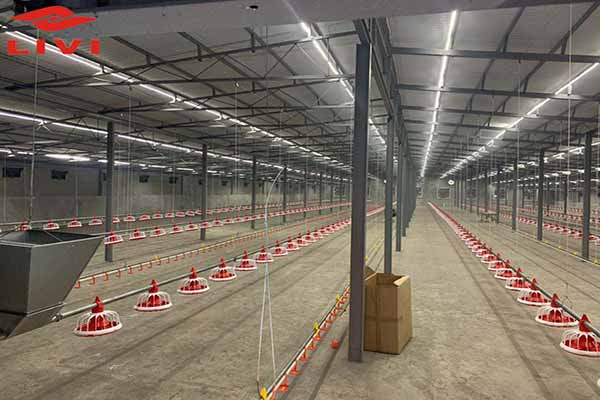
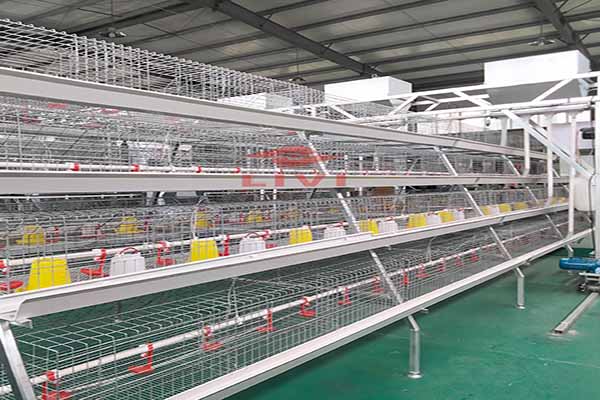
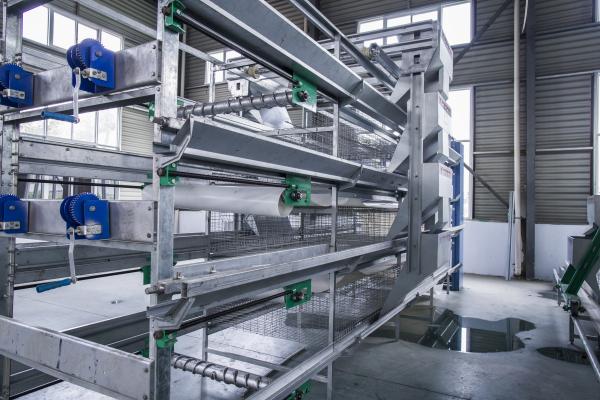
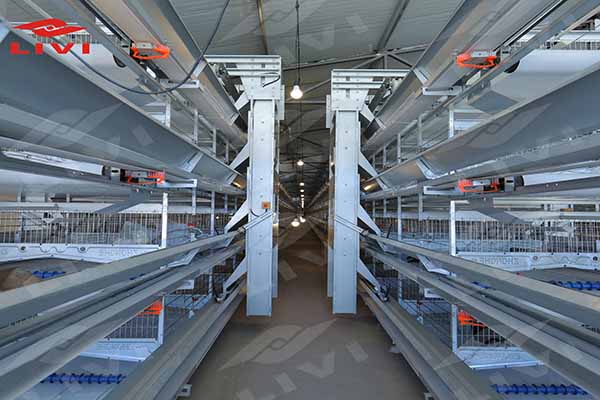
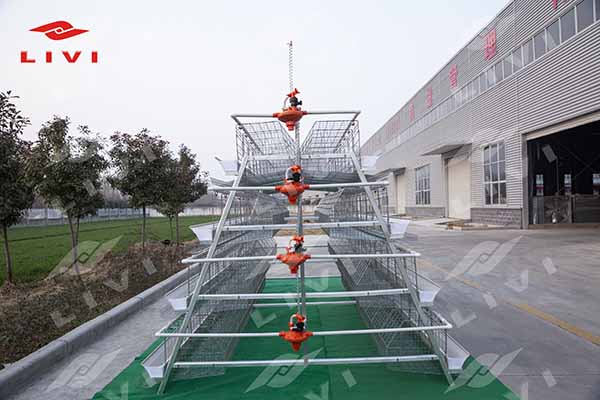
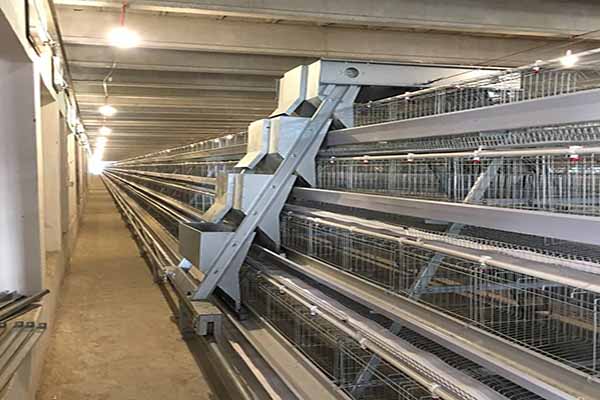
The confirmed reference inputs are Uganda, a 40,000-layer target, an open house, and a 50 x 12 x 3.5 m wood-truss structure. The documented layer battery cage system uses A-type layer cages arranged 3 rows x 4 tiers, with separate A-type chick cage support at 2 rows x 3 tiers for the brooding-to-layer transfer. The equipment scope includes an automatic traveling feeder with feed tower, nipple drinkers with per-tier pressure adjustment, and scraper automatic manure removal. The project is recorded at the first flock transfer stage from the brooding house to the layer house. Production, feed saving, labor saving, and return-on-investment results are therefore not supplied and should not be treated as complete.

This matters because the site and configuration, not a per-cage quote, will determine operating cost. Open-house wood-truss construction makes ventilation, heat stress, manure moisture, and biosecurity especially important. The buyer should compare cage system proposals only after those failure points are tested.
Why Feasibility Must Precede an Automatic Layer Cage System Price Review for a 40,000-Layer Uganda Project
The investor must first confirm the 40,000-layer direction, site, housing plan, utility reliability, labor supply, and market access before comparing cage system quotations. In an open-house Uganda site, heat and humidity stress, power interruption, and water shortage can convert a lower-cost equipment option into a higher-cost operating failure. The A type layer cage configuration is not a climate control system; ventilation, shading, water quality, and outlet drainage must be evaluated separately.
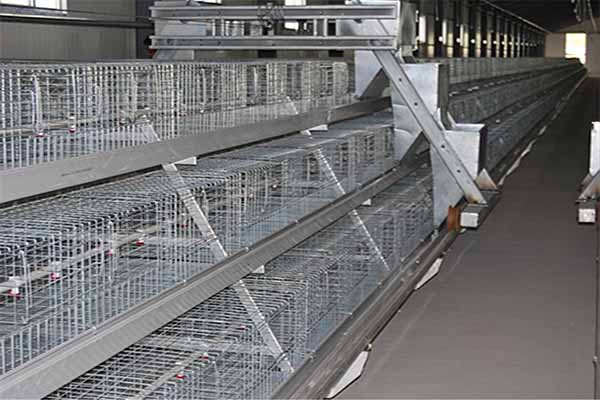
Power and water continuity should be stress-tested because automatic traveling feeding, nipple drinking, and scraper manure removal depend on stable utilities. If backup generation or stored water is inadequate, a semi-automatic or manual scope may be more operationally suitable. Because the A45-41 product reference supports manual, semi-automatic, and automatic options, the buyer should select the automation level only after field conditions, task responsibilities, and maintenance capacity are confirmed.
Uganda Site Readiness: Transport, Utilities, and Operating Constraints Before Installation
A Uganda 40,000-layer price discussion should include delivery boundary, site access, offloading space, and responsibility for final transport to the farm. LIVI supports 40HQ and 20GP export loading and can provide packing lists, installation documents, and equipment instructions. Shipment duration, local duty, and final freight price should be confirmed as part of the Uganda delivery scope because they depend on the destination, route, and import arrangements.

Utilities need separate confirmation. The buyer should verify voltage, phase, total connected load, motor starting load, backup generator or automatic transfer availability, and response time after an outage. Water pressure, storage volume, water quality, and the behavior of feeding, drinking, cooling, and manure removal during a power or water interruption should also be confirmed. For an open-house site, ventilation failure and heat stress risk should be tested separately, because the cage system cannot replace climate management or utility reliability.
Local permits, waste-disposal or manure sale requirements, and biosecurity rules should be confirmed with the relevant Ugandan authorities or project consultants before final equipment selection. These local inputs can change row spacing, drainage, service access, and manure handling capacity.
Manual, Semi-Automatic, and Fully Automatic Configuration Comparison for a 40,000-Layer Uganda Project
| Decision dimension | Manual configuration | Semi-automatic configuration | Fully automatic configuration | Verified A45-41 or Uganda reference condition | Selection rule |
|---|---|---|---|---|---|
| Feeding | Manual or push-cart feeding; high daily labor exposure | Automatic traveling feeder with feed tower; reduces feed handling labor | Automatic traveling feeder plus metering and control; requires stable power and trained operators | A45-41 supports semi-automatic push-cart, gantry, or traveling feeder; Uganda reference uses automatic traveling feeder with feed tower | Choose based on labor cost, feed-loss measurement, and power reliability |
| Drinking | Manual or basic drinker checks; more water-line labor | Basic automatic drinking with nipple drinkers and per-tier pressure adjustment | Automatic drinking with filters, pressure regulation, and possible monitoring | A45-41 standard includes basic automatic drinking; Uganda reference uses nipple drinkers with per-tier pressure adjustment | Confirm water pressure, quality, and storage volume before selecting |
| Manure removal | Manual removal or periodic scraping; high labor and moisture control | Scraper automatic manure removal; still needs disposal schedule | Belt or scraper with more automation and alarm or control; still requires maintenance | Uganda reference uses scraper automatic manure removal | Set frequency by manure moisture, house humidity, ventilation, and disposal route |
| Egg collection | Manual collection; more labor and handling loss risk | Manual collection or egg collection machine option | Automatic egg collection plus central collection; greater mechanical complexity | A45-41 has manual or egg collection machine option; Uganda reference requires buyer to plan collection | Add automation only where egg-loss recording and maintenance capacity support it |
| Operational advantages | Lower initial equipment scope; less electrical dependency | Reduced feed handling and manure removal labor; fits the supplied Uganda reference | Reduced daily labor across feeding, egg collection, and manure handling | A45-41 recommended farm scale: 5,000–20,000 birds; Uganda reference uses automatic traveling feeder and scraper manure removal | Match the advantage to the actual labor task and utility reliability |
| Operational limitations | Highest daily labor requirement; more manual stockmanship | Egg collection and routine stockmanship remain manual; still needs stable power and water | Higher dependence on electricity, water, maintenance skills, and spare-part supply | A45-41 is not a single 40,000-bird unit; Uganda reference is at first flock transfer | Do not select fully automatic only from the word automatic |
| Application conditions | Suitable where labor is available and power is limited | Suitable where basic power and water are stable but full automation support is not ready | Suitable where every house has confirmed power backup, water storage, trained operators, and spare parts | Uganda reference uses an open house and 50 x 12 x 3.5 m wood-truss structure | Confirm site conditions house by house before final configuration |
| Investment or implementation stage | Use as an early phase or backup where capital is constrained | Use as the first production phase after the brooding-to-layer transfer | Use only after semi-automatic operations are stable and maintenance capacity is proven | A45-41 recommended farm scale: 5,000–20,000 birds, so 40,000 layers must be divided across multiple units or phases | Phase investment around confirmed power, water, labor, and first-flock learning |
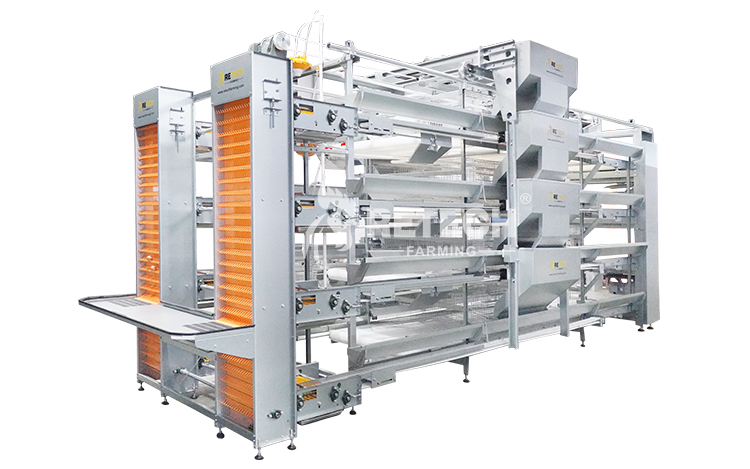
The A45-41 standard configuration includes an A-type cage, traveling feeder, basic automatic drinking, scraper manure removal, and an egg collection machine option. Because the product has a recommended farm scale of 5,000–20,000 birds, a 40,000-layer plan must be divided into multiple units or phases. The Uganda reference configuration is closest to the semi-automatic row: automatic traveling feeding, nipple drinking, and scraper manure removal, with egg collection and routine stockmanship still planned by the buyer. A fully automatic configuration should only be selected after power, water, maintenance skills, and spare-part supply are already available at every house.
How Should a 40,000-Layer Uganda Project Be Phased and Commissioned?
A practical sequence is to submit the proposed location, house count, dimensions, land layout, power and water conditions, and automation target; request a house-by-house A-type cage layout; and confirm whether 40,000 layers will be divided into multiple 5,000–20,000-bird units or phases. After the manual, semi-automatic, or fully automatic configuration is approved, the buyer should confirm site readiness for electricity, water, ventilation, drainage, biosecurity access, and offloading before equipment arrival.
Compare Manual, Semi-Automatic, and Fully Automatic Options
Send your 40,000-layer production schedule and house layout so LIVI can map labor, maintenance, and lifecycle cost trade-offs across configurations.
Equipment should be received and inspected against the packing list and installation documents before assembly. Cage sections and automation systems should be installed using the supplied drawings, remote guidance, or on-site supervision. Feeding, drinking, manure removal, and egg collection functions should be tested before flock placement or before transferring the next batch. Operators should be trained on daily inspection, alarm response, water-line checking, feeder adjustment, and maintenance routines.
Early site or operational indicators that may favor phasing or scaling down include repeated voltage drops or water shortages, poor drainage, high open-house temperature stress, insufficient trained labor for daily tasks, and unclear manure removal or disposal capacity. These indicators should be resolved before committing the final equipment scope across all houses.
Supplier Audit Sequence for a 40,000-Layer Uganda Project
A credible supplier audit should move from a written document request to technical inspection and then to a decision review.
1. Request documents. Ask for the equipment list, house-by-house A-type cage layout, packing and 40HQ/20GP container plan, delivery boundary, installation documents, operator training content, spare-part lead time, wear-part replacement guidance, and after-sales response procedure. LIVI can provide packing lists, installation documents, equipment instructions, and after-sales technical support, and it references 48-hour after-sales response.
Prepare Your Uganda Supplier Evidence Checklist
Ask for installation supervision, operator training, spares lead time, and after-sales scope before you compare automatic cage system quotations.
2. Inspect technical areas. Confirm cage rows, tiers, and service access match the confirmed house width and transfer route. Check feeder, drinker, scraper motor, and control interfaces. Confirm water-line and manure-outlet positions, and verify offloading and material sorting can be managed at the farm.
3. Check warning signs. Treat an incomplete delivery boundary, missing motor or water-line interfaces, no written task list per house, no spare-part response procedure, no on-site supervision plan for a multi-house rollout, or a quotation based on bird count alone rather than a reviewed layout as unresolved risks.
4. Take decision actions. If the document package and technical scope are consistent, proceed to a site-level review. If any warning sign is unresolved, request a corrected proposal or phase the project before approving production.
Do not finalize an automatic layer cage system price until the audit documents, local delivery scope, and maintenance support are aligned with the 40,000-layer phased plan.
FAQ
1. Which labor tasks remain manual in a 40,000-layer automatic cage system in Uganda?
Daily inspection, dead bird removal, egg collection if no automatic egg collection or packing line is selected, house cleaning, water-line checks, feed inventory, and manure disposal supervision generally remain manual. Staffing cost assumptions should be based on a written task list per house and per flock stage, not on the word automatic alone. The Uganda reference uses scraper manure removal, automatic traveling feeding, and nipple drinkers, but egg collection and routine stockmanship still need to be planned by the buyer.
2. What power and water failure scenarios should be stress-tested before comparing automatic cage system prices in Uganda?
Confirm voltage, phase, total connected load, starting load for motors, backup generator or automatic transfer availability, and response time after an outage. Confirm water pressure, storage volume, water quality, and how feeding, drinking, cooling, and manure removal behave during a power or water interruption. For an open-house site, test ventilation failure and heat stress risk separately because the cage system cannot replace climate management or utility reliability.
3. How should manure removal frequency and disposal capacity be budgeted for a 40,000-layer Uganda project?
The Uganda reference project uses scraper-type automatic manure removal, so the equipment can reduce daily manual removal labor but still requires a defined removal schedule. Manure moisture, breeding-house humidity, water spillage, ventilation, and final disposal or sale route should determine whether removal is daily, split daily, or adjusted by season. Budget it as a lifecycle operating cost including energy, scraper or belt maintenance, labor, storage, transport, and biosecurity, not as an equipment footnote.
4. Which A45-41 verified parameters should anchor a 40,000-layer configuration comparison?
A45-41 has a recommended farm scale of 5,000–20,000 birds, offers 3–5 tiers, and has a capacity of 120 or 160 birds per unit. The cage uses hot-dip galvanized Q235 steel and is stated for a 15–20-year service life. For 40,000 layers, the project must be planned as multiple houses or phased units because the product reference is not a single 40,000-bird unit.
5. What supplier evidence should a 40,000-layer Uganda project request before finalizing an automatic layer cage system price?
Request the equipment list, layout, packing and container plan, delivery boundary, installation documents, remote or on-site supervision scope, and operator training content. Request spare-part lead time, wear-part replacement guidance, and stated after-sales response under Uganda field conditions. LIVI provides packing lists, installation documents, equipment instructions, after-sales technical support, and references 48-hour after-sales response, but final delivery and local service scope should still be confirmed in the order.
TAGs: automatic layer cage system price Uganda, 40000 layers Uganda, A45-41 layer cage, A-frame layer cage system, automatic feeding and manure removal, Uganda poultry project feasibility