


Quick Answer: How Should You Build or Expand a Commercial Layer Farm in Nigeria?
To build or expand a commercial layer farm in Nigeria, compare a new build, expansion and retrofit against egg sales, site conditions, operating resources and financial risk. For a proposed 100,000-layer operation, confirm house capacity, water, power, ventilation and funding before committing to a route or flock size.
Assess Your Nigerian Layer Farm Project Direction
Share whether you plan a new build, expansion or retrofit, along with your proposed flock and site conditions, to discuss the main planning constraints.
Phased development may be appropriate if the first stage can operate independently and the site can support later growth. The LIVI H1200 is an equipment option for larger layer farms, not a substitute for a site-specific design. The target does not establish that land, buyers, financing or a completed project already exist.
Which Project Route Fits a 100,000-Layer Plan?
First, test whether egg production is the right business direction. Ask potential buyers about volumes, collection, payment terms and competing supply. Check current local egg and feed prices. A buyer conversation is useful evidence, but it is not a sales commitment.
Compare the routes on the same operating assumptions:
| Route | First checks | Reason to reconsider |
|---|---|---|
| New build | Land access, drainage, water, power, transport, biosecurity and permissions | Essential utilities, access or funding remain uncertain |
| Expansion | Existing capacity, buyer demand, shared utilities and construction separation | Utilities or sales cannot support additional birds |
| Retrofit | Structure, usable dimensions, airflow, equipment access and disruption | Alterations and interruption make a new house more practical |
Record what already exists and what must change. Check the proposed site with relevant local authorities and technical advisers before approving construction. Verify permission requirements for the actual location rather than assuming they match another project's requirements.
Decision rule: proceed to detailed design when the preferred route has credible sales evidence, a workable site, an operating plan and a financing path. Otherwise, resolve the missing information or defer the commitment.
How large should the first phase be?
Compare full-scale development with a smaller first phase using consistent assumptions for birds, egg sales, feed, labor, utilities and funding. Include the cost of operating each phase. No universal minimum economic flock size or appropriate first-phase capacity has been established.
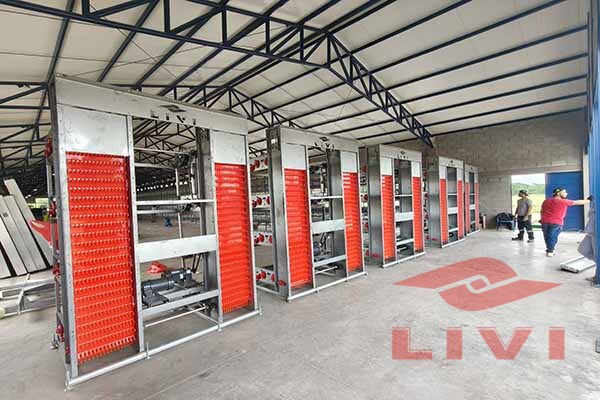
Assess space and utility capacity for later growth. Check whether future houses would change vehicle access, manure handling, ventilation or biosecurity separation. Define the conditions that must be met before adding birds.
How Should You Test the Layer Farm Cost?
Prepare capital and operating budgets separately. A layer battery cage system price is only one part of the investment, not the total farm cost.
| Budget area | Items to estimate locally |
|---|---|
| Capital | Land, houses, equipment, utilities, backup power, delivery and installation |
| Operating | Birds, feed, labor, energy, water, veterinary support, transport, maintenance and parts |
| Finance and risk | Financing charges, operating funds and contingency for identified risks |
Estimate saleable egg revenue using locally researched prices and production assumptions suited to the breed and management plan. Subtract operating costs to test the operating margin; consider financing and capital expenditure separately. Repeat with less favorable egg prices, higher feed costs and reduced saleable output. Record which assumption causes the plan to fail and what evidence could improve it.
Do not present a return or payback as a result until costs and sales assumptions have been checked. Obtain comparable supplier scopes and local estimates, including costs outside the equipment package.
What Must Each Project Route and Cage Option Verify?
Select a layer battery cage system after the business and site review. Compare usable capacity, inspection access, airflow, labor and maintenance for each proposed layout.
Review the Site Before Selecting Equipment
Provide available land or house dimensions, water and power details, and your expansion plans so the layout and utility questions can be reviewed.
| Option | Supplied reference | Project-specific confirmation |
|---|---|---|
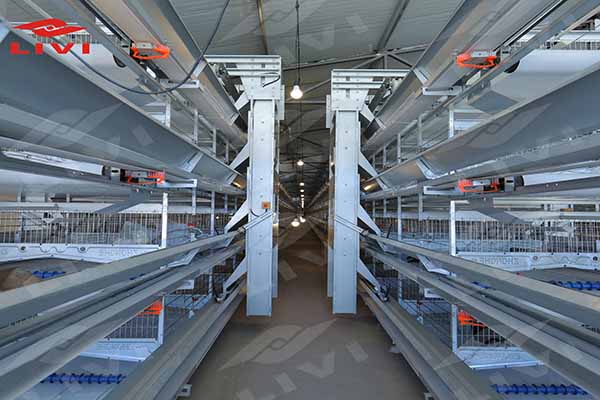
| H1200 H-Type Layer Cage | For layer farms above 10,000 birds; available in 3-12 tiers | House arrangement, tier count, capacity, ventilation and utilities |
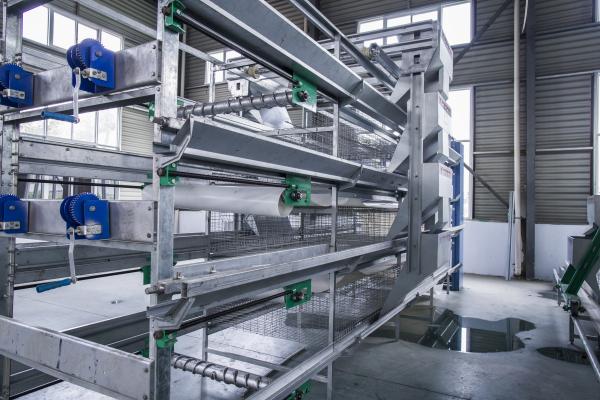
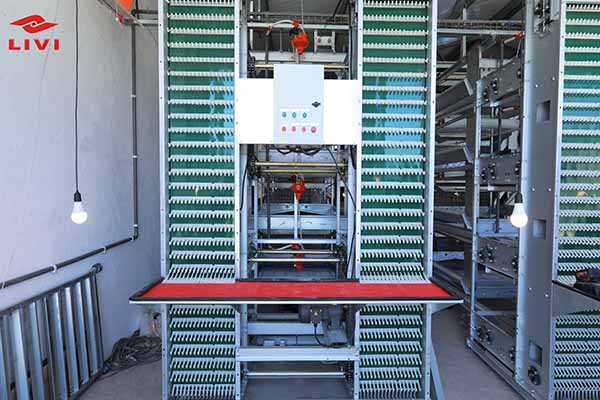
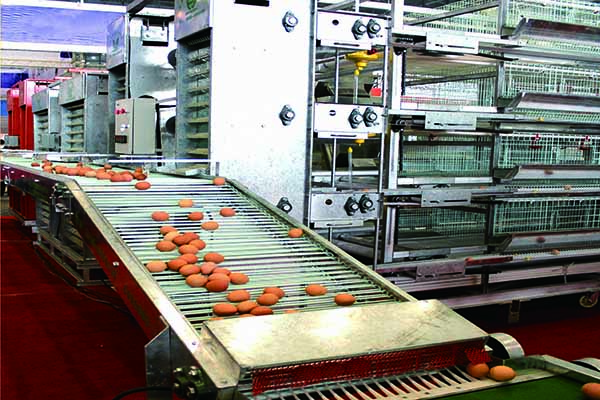
| H1200 standard equipment | Traveling Feeding System, Automatic Drinking, flat-belt and transverse/inclined Manure Removal Systems, and an egg collector | Quantities, connections, power needs and installation scope |
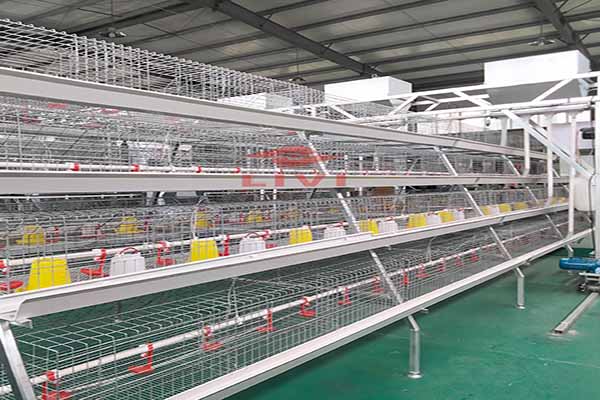
| A-Type Layer Cage | Supplier states a 5,000–30,000-bird application range | Whether a multi-house arrangement fits the site and budget |
| Additional H1200 functions | Central egg collection, ventilation and alarms can be configured | Inclusion in the written proposal |
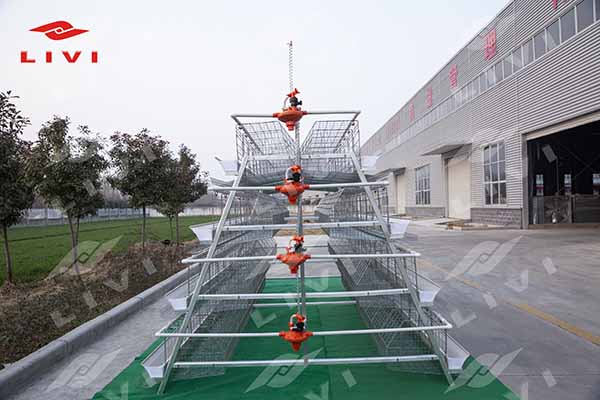
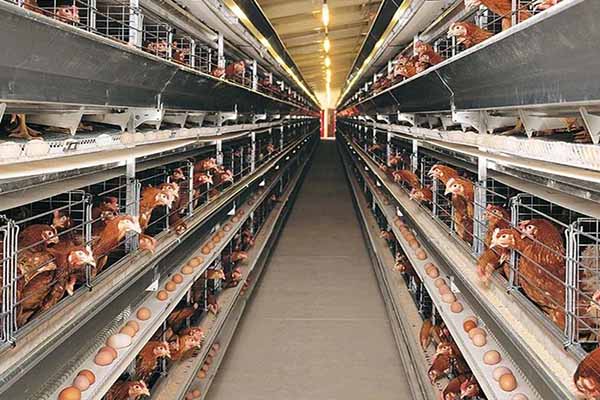
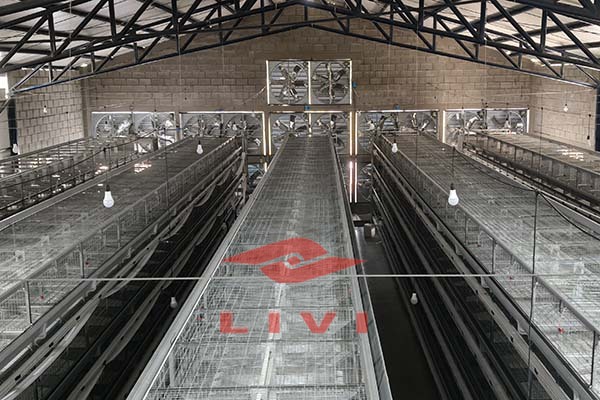
An H type layer cage can be considered for a larger project seeking a multi-tier layout and automation. Suitability depends on the house design and ventilation throughout the tiers; the available tier range is not a recommendation to use every tier.
An A type layer cage is an alternative to assess against the same brief. Its application range does not establish the capacity of one cage or a complete 100,000-layer farm. Neither option confirms house count or equipment quantity without a layout.
How Much Automation Does the Farm Need?
Specify tasks rather than asking only for a fully automatic system. List Automatic Feeding, Automatic Drinking, Automatic Egg Collection, Automatic Manure Removal, ventilation, Environmental Control, weighing and monitoring separately. Ask what is included, how systems connect, what requires an operator and what happens during a power interruption.
The H1200 standard list includes the feeding, drinking, manure removal and egg collection equipment above. Central egg collection, ventilation and alarms require configuration confirmation. Do not assume every monitoring function is included.
Automatic layer farming equipment still requires staff to inspect birds, check deliveries, clean equipment and respond to faults. Agree on installation guidance, operator training, spare-parts recommendations and support responsibilities. LIVI provides layout and configuration support, remote installation guidance and technical support; confirm arrangements for the actual project.
Can the Site Support Ventilation, Water and Power?
Before approving a high-density layout, have the designer assess airflow through all tiers, cooling, fan access and monitoring against the house design and local climate. The University of Georgia's minimum ventilation calculator illustrates why assessment considers water use and indoor and outdoor conditions together; its example settings are not a design for this farm.
Check water availability and quality, and how water will reach the Drinking System. Assess the electrical supply and backup for critical functions, especially ventilation and drinking. Confirm delivery destination, unloading access and local handling responsibilities separately; no project transport cost has been established.
Temperature, humidity, feed, water, light and stocking density depend on breed, age, climate and management conditions. Coordinate these requirements with the flock adviser and equipment designer. Consult a local veterinarian about health concerns and follow applicable local veterinary and biosecurity requirements.
What Problems Should Managers Check and Prevent?
Weak sales commitments, insufficient utilities, inaccessible equipment or disruptive retrofit work can make a route unsuitable. During operation, investigate changes in water flow, wet manure, odors, bird behavior or egg output before deciding to add birds.
Use this management sequence:
- Document the route: identify the planned flock, existing facilities and phases.
- Check constraints: review sales, site access, utilities, biosecurity, financing and permissions.
- Compare designs and budgets: include house works, operating costs and contingency.
- Define equipment functions: request preliminary layouts and a written automation scope.
- Review before approval: check ventilation calculations, interfaces, installation, training and maintenance access.
- Record and respond: log feed and water use, egg output, mortality, environmental readings and faults; investigate trends and document corrective action.
If an existing house lacks space or airflow, compare retrofit works and disruption with a new build. If sales or operating funding remain uncertain, reassess the first phase. Avoid choosing cages solely by tier count, treating automation as a staffing plan or comparing prices without house and operating costs.
The decision to build or expand a commercial layer farm in Nigeria should remain open until the chosen route can support the proposed birds and the people operating it.
Compare Automation Needs for Your Layer Farm
Describe the feeding, drinking, egg collection, manure removal and ventilation functions you want to automate for your proposed Nigerian layer farm.
FAQ
1. How much does it cost to build a commercial layer farm for 100,000 birds in Nigeria?
The total requires a site-specific budget. Obtain estimates for land, houses, birds, equipment, utilities, delivery, installation and operating funds. Compare scopes and verify local feed, labor, energy and egg-price assumptions before assessing feasibility.
2. Can an existing poultry house be converted for a 100,000-layer project?
Conversion may be possible after assessing buildings and utilities against the proposed layout. Check structure, usable dimensions, ventilation, water, power and production disruption. Final capacity requires an engineered design; the existing footprint alone is insufficient.
3. Does a 100,000-layer farm have to use H-Type cages?
No cage type is established as mandatory. Compare layouts against site conditions, ventilation, capital, labor, maintenance and expansion plans. H1200 is intended for layer farms above 10,000 birds, but its arrangement and project capacity require confirmation.
4. Can a commercial layer farm in Nigeria be developed in phases?
Yes, if sales, funding and infrastructure support the first flock and later expansion. Check water, power, access, biosecurity and layouts for each phase. The appropriate initial flock size depends on verified project conditions.
5. What should be included when comparing automation proposals?
List feeding, drinking, egg collection, manure removal, ventilation and monitoring separately. Ask what is included, how systems connect, what power and maintenance they require and who trains operators. A fully automatic label does not establish the complete scope.
TAGs: commercial layer farm in Nigeria, 100000 layer farm planning, layer farm expansion and retrofit, H-Type Layer Cage planning, layer farm automation, layer farm cost assessment
Plan Your Next Layer Farm Decision
Tell LIVI about your 100,000-layer target, project route, poultry house status and operating priorities to discuss what information is needed next.