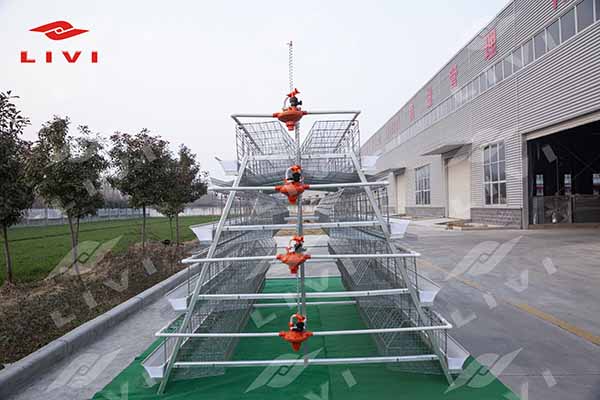



Summary: Analyze the detailed cost of battery cage system in Tanzania for a 60,000-layer commercial operation. This guide provides a complete financial breakdown, from equipment to installation, helping farm managers optimize investment for superior flock density, egg yield, and long-term operational savings.
Understanding the Critical Role of the Battery Cage System in Tanzania’s Commercial Poultry
This section explores how the Battery cage system in Tanzania has become a cornerstone for modern commercial egg production, addressing key challenges of space efficiency and disease control to boost farm profitability.
- Enhanced Biosecurity: Birds are separated from their waste, drastically reducing the spread of parasites and diseases like avian influenza.
- Labor & Feed Efficiency: Automated feeding and egg collection systems cut labor costs by up to 60%, while controlled feeding reduces waste.
- Higher Yield: The controlled environment minimizes stress and feather pecking, supporting egg production rates that can exceed 90% during peak lay.
Implementing this system effectively requires careful planning. Key steps for success include:
- Site Assessment: Evaluating land, water access, and proximity to power grids.
- System Sizing: Choosing a cage capacity (e.g., 5,000, 10,000, or 20,000 birds) that matches market demand and investment capacity.
- Infrastructure Setup: Ensuring proper shed construction, ventilation, and a reliable backup power source for climate control.
The strategic use of a battery cage system is pivotal for achieving high-density, hygienic, and profitable poultry farming in Tanzania. We provide robust, hot-dip galvanized cages designed for the local climate and offer full installation support. [Contact us] for a customized project layout and ROI analysis tailored to your farm’s scale.
Breaking Down the Core Equipment Cost of Battery Cage System in Tanzania
This section provides a detailed financial analysis for poultry farmers in Tanzania considering a modern battery cage system, examining the primary investment components beyond the initial purchase price.
- Cage units and structural frames (40-50% of total)
- Feeding and drinking systems (20-25%)
- Manure removal equipment (10-15%)
- Installation and commissioning labor (10-15%)
For accurate budgeting, consider these sequential steps:
- Assess your available space and target flock size (e.g., 5,000 vs. 20,000 layers).
- Obtain quotes for both locally assembled and imported battery cage systems, noting differences in material quality and warranty.
- Factor in ancillary costs for electrical wiring, water supply modification, and potential warehouse reinforcement.
| Cost Component | Approximate Share | Key Consideration |
|---|---|---|
| Cage Structure | 40-50% | Galvanization quality dictates lifespan |
| Automation | 30-40% | Reduces long-term labor costs |
| Installation | 10-15% | Local technician availability is crucial |
Understanding this breakdown allows for a realistic financial plan. We specialize in durable systems tailored for the Tanzanian market, offering detailed quotations that include all ancillary expenses. Contact our team for a personalized Cost of Battery Cage System in Tanzania projection based on your farm’s specific dimensions and goals.
Factoring Installation and Operational Costs into Your Total Investment
When planning a poultry farm in Tanzania, a comprehensive budget must look beyond the initial purchase price to include both installation and ongoing operational expenses. This holistic view is essential for calculating true profitability and securing financing.
- Delivery and customs clearance for imported systems
- Foundation and shed preparation specific to your site
- Professional assembly and installation labor
- Initial utility connections (water, electricity)
Ongoing operational costs significantly impact your long-term return on investment. Key factors to model include:
- Energy Consumption: Ventilation fans, automated feeding lines, and lighting systems contribute to monthly electricity bills.
- Labor Efficiency: While battery cages reduce labor needs, budget for skilled technicians for maintenance.
- Maintenance & Repairs: Allocate funds for spare parts, like nipple drinkers or conveyor belts, to minimize downtime.
- Water Usage: Automated drinking systems must be factored into utility costs.
For a clearer picture, consider the cost breakdown for a mid-scale operation:
| Cost Category | Initial Installation | Annual Operational |
|---|---|---|
| Cage System & Delivery | ~60-70% of total investment | — |
| Shed & Foundation Work | ~15-20% | — |
| Utilities & Labor | — | Major recurring expense |
| Maintenance Reserve | ~5-10% | 2-5% of system value |
Understanding the full Cost of Battery Cage System in Tanzania, from setup to daily operation, is the key to a sustainable business. We provide detailed, localized financial models that include all these factors for Tanzanian conditions. [Contact us] for a customized cost-benefit analysis tailored to your specific farm size and location.
Optimizing Your Investment for Superior Flock Density and Egg Yield
To maximize returns in Tanzania’s commercial layer farming, strategic investment in the right housing is crucial. This section explores how modern equipment directly enhances bird density and productivity, ensuring your capital delivers measurable results.
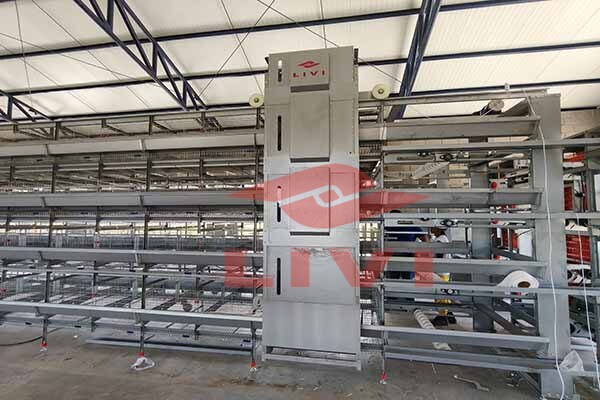
- Precise feed and water delivery to each bird, reducing waste by up to 15%
- Automated egg collection belts, minimizing breakage and labor
- Efficient manure removal, improving overall bird health and hygiene
For a concrete example, consider a mid-sized farm in Arusha with 5,000 layers. After installing a modern Battery Cage System in Tanzania, they achieved:
- A 25% increase in usable space, allowing for future expansion.
- Egg yield rose by 18% due to reduced stress and disease transmission.
- Daily management time decreased by 30%, lowering operational costs.
| Metric | Before System | After System |
|---|---|---|
| Stocking Density (birds/m²) | 7 | 15 |
| Average Hen-Housed Egg Production | 280 eggs/cycle | 330 eggs/cycle |
| Feed Conversion Ratio | 2.3:1 | 2.1:1 |
Optimizing your investment with a tailored cage system translates directly to higher density and superior yield. We provide cages engineered for Tanzania’s climate with local technical support for seamless integration. To receive a customized ROI projection and layout for your farm size, contact our team today.
Calculating Long-Term Operational Savings and ROI for Your Farm
Calculating long-term operational savings and return on investment (ROI) is essential for Tanzanian poultry farmers to make financially sound equipment decisions. This analysis goes beyond the initial purchase price to evaluate how an investment, such as a battery cage system, pays for itself over time through improved efficiency and reduced running costs.
- Lower feed waste due to controlled feeding systems
- Reduced labor requirements for egg collection and manure management
- Improved bird health and lower mortality rates, leading to more consistent production
- Efficient use of space, allowing for higher stocking density per square meter
To accurately project your farm’s ROI, follow a structured evaluation:
- Document all initial costs, including the cage system, installation, and housing modifications.
- Estimate annual operational savings from the factors listed above, using conservative figures.
- Calculate the payback period by dividing the total initial investment by the estimated annual savings.
- Project the total ROI over the system’s expected lifespan, which can be 10-15 years for quality equipment.
For instance, a mid-sized farm in Morogoro with 5,000 layers reported recouping its initial Cost of Battery Cage System in Tanzania within 22 months. The farm achieved this through a 12% reduction in feed costs and a 40% decrease in labor hours dedicated to daily flock management, showcasing a clear path to profitability.
Ultimately, a detailed ROI analysis transforms a major capital expense into a strategic investment. We provide customized financial models that factor in local feed and labor costs to give you a precise forecast for your operation. Request a detailed ROI analysis based on your farm’s specific scale and location in Tanzania.
Securing Your Farm’s Future: Implementing a Profitable 60,000-Layer System
This section details the strategic planning and key investments required to establish a large-scale, profitable poultry operation in Tanzania, moving from concept to a fully functional farm.
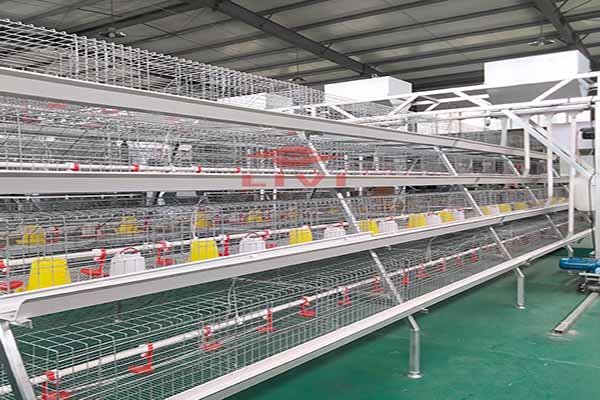
- High-capacity, automated layer cage systems for optimal space and welfare
- A reliable biosecurity perimeter and climate-controlled housing
- On-site feed storage and a dedicated water treatment system
Operational efficiency is critical for profitability. Your plan must address:
- Sourcing day-old chicks from certified, disease-free hatcheries.
- Implementing a strict vaccination and health monitoring protocol.
- Establishing partnerships with reliable feed suppliers and egg offtakers.
- Training skilled personnel for daily management and equipment maintenance.
By focusing on these core pillars, your 60000 Layer Setup becomes a resilient asset. We provide turnkey project management with local technical support to navigate Tanzanian market logistics. [Contact us] for a customized profitability projection and cage layout for your specific location.