


1. Understanding the Poultry Market in The Gambia
The poultry sector in The Gambia is expanding rapidly due to increasing demand for fresh eggs in urban areas such as Banjul and Serrekunda. Local egg production still struggles to fully meet market demand, creating a strong opportunity for investors planning medium-to-large-scale commercial farms.
For beginners planning to raise 50,000 layer chickens, cage-based intensive farming is the most practical and scalable model. Compared with deep litter systems, modern cage systems provide:
- Higher stocking density
- Better disease control
- Automated feeding and egg collection
- Lower labor requirements
- Higher egg production efficiency
If properly managed, 50,000 layers cage farming can become a stable and profitable agribusiness in The Gambia.
2. Choosing the Right Cage System for 50,000 Layers
For a project of this size, beginners should focus on automated layer cage systems, mainly:
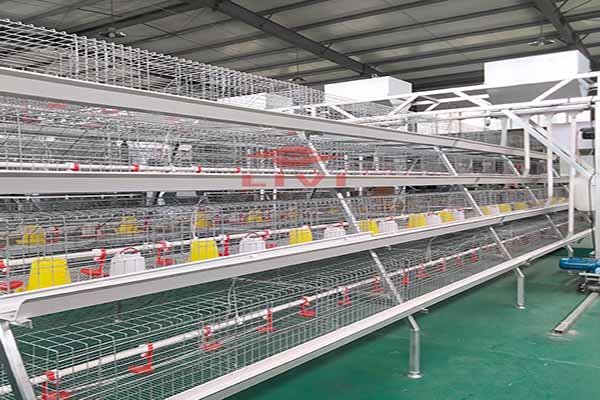
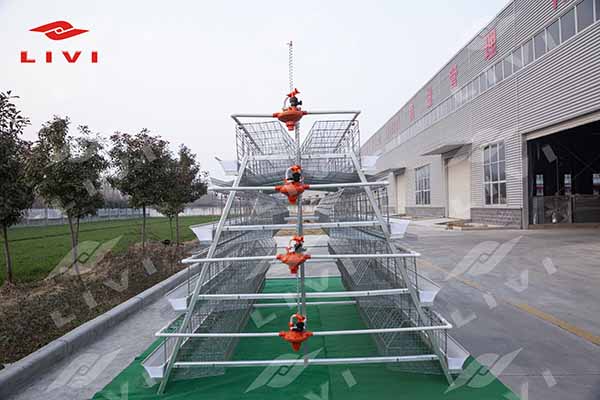
A-Type Layer Cages
- Suitable for semi-automatic farms
- Lower initial investment
- Ideal for farmers transitioning from small-scale operations
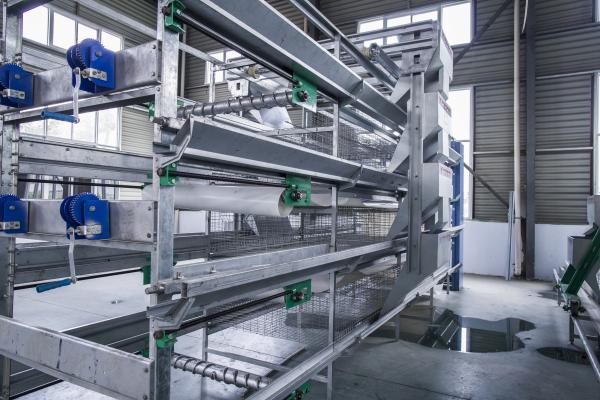
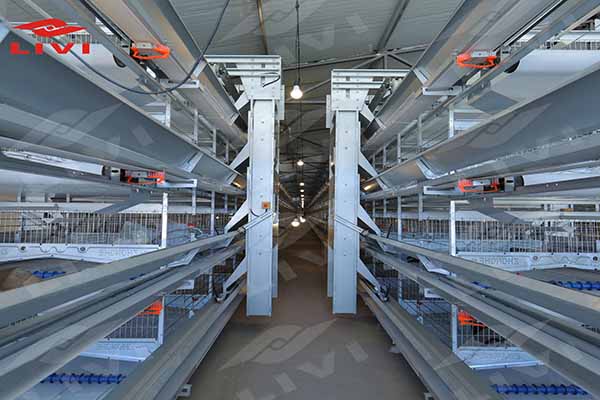
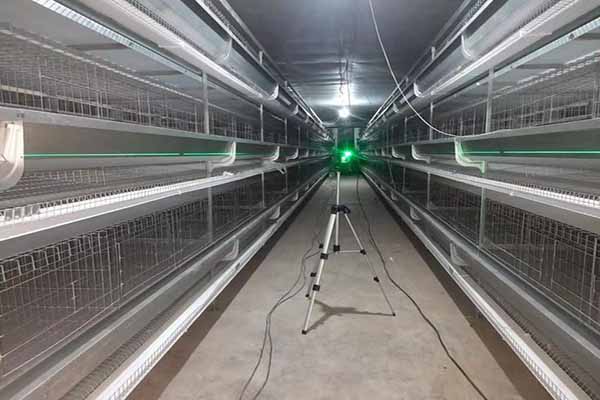
H-Type Layer Cages
- Fully automated
- High-density design
- Integrated automatic feeding, manure removal, and egg collection
- Suitable for 30,000–100,000+ birds
For 50,000 birds in The Gambia, the H-type automatic cage system is generally recommended. It reduces labor cost significantly and ensures uniform management.
Material Recommendation:
Use hot-dip galvanized steel cages. Due to The Gambia’s humid coastal climate, corrosion resistance is critical. High-quality galvanized cages can last 15–20 years.
Raising 50,000 Layers Cage Systems in The Gambia
3. Farm Planning and Layout Design
Before construction, professional farm planning is essential.
3.1 Land Requirements
For 50,000 layers using H-type cages:
- Land size: 8,000–12,000 square meters
- 2–3 poultry houses (depending on capacity per house)
- Separate areas for feed storage, egg storage, office, and manure handling
3.2 Poultry House Dimensions
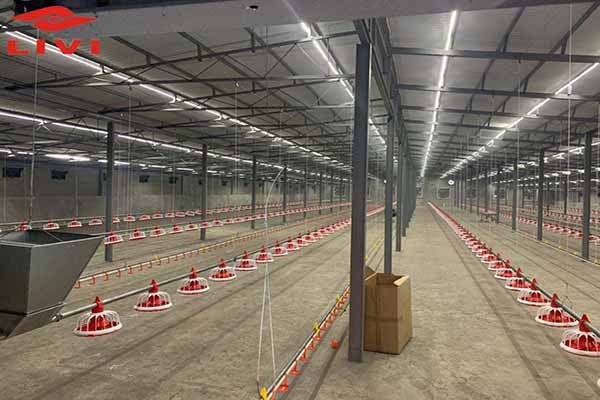
Typical house design:
- Width: 12–15 meters
- Length: 80–100 meters
- Height: 3.5–4 meters
Steel structure poultry houses are recommended for durability and faster installation.
3.3 Ventilation System
The Gambia has a tropical climate with high temperatures. Proper ventilation is critical.
Recommended:
- Negative pressure ventilation system
- Exhaust fans
- Cooling pads
- Sidewall air inlets
Temperature control directly affects egg production rate and feed conversion ratio.
4. Essential Automatic Equipment for a 50,000-Layer Farm
A modern 50,000-layer cage farming in Gambia should include:
4.1 Automatic Feeding System
- Chain or auger feeding
- Even feed distribution
- Reduced feed waste
- Labor savings up to 70%
4.2 Automatic Egg Collection System
- Conveyor belts
- Central egg collection room
- Reduced egg breakage
- Improved hygiene
4.3 Automatic Manure Removal System
- Belt manure removal
- Scheduled cleaning
- Reduced ammonia levels
- Improved bird health
4.4 Drinking System
- Nipple drinking lines
- Adjustable water pressure
- Clean and hygienic water supply
Automation ensures consistent management and reduces reliance on manual labor.
5. Breed Selection for High Egg Production
Choosing the right layer breed is critical.
Common commercial breeds suitable for West Africa:
- ISA Brown
- Hy-Line Brown
- Lohmann Brown
These breeds:
- Start laying at 18–20 weeks
- Peak production: 90–95%
- Annual egg production: 300–320 eggs per hen
For 50,000 layers:
- Expected daily egg output at peak: 45,000–47,500 eggs

6. Biosecurity and Disease Management
In tropical regions, disease prevention must be a top priority.
Key Measures:
- Controlled farm access
- Footbaths and disinfection systems
- Vaccination schedule
- Proper rodent control
- Regular cleaning and manure removal
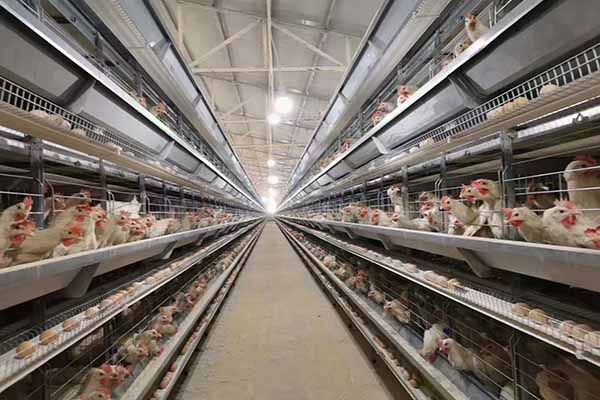
A cage system makes disease control easier because birds have less direct contact compared to floor systems.
7. Feed Management and Cost Control
Feed accounts for 60–70% of total production cost.
Layer feed phases:
- Pre-lay feed
- Layer phase 1 (20–40 weeks)
- Layer phase 2 (40+ weeks)
Ensure:
- Proper calcium levels
- Balanced protein content
- Clean water supply
Good feed management directly improves egg shell quality and laying rate.
8. Labor Requirements
For a 50,000-layer automated farm:
- 1 farm manager
- 4–6 workers (depending on automation level)
- 1 technician (optional but recommended)
With automation, one worker can manage 8,000–12,000 birds efficiently.
9. Estimated Investment Overview
Although exact costs depend on supplier and material, the main investment includes:
- Poultry house construction
- Cage system
- Automatic feeding system
- Egg collection system
- Manure removal system
- Ventilation equipment
- Day-old chicks
- Feed
For beginners in The Gambia, working with an experienced poultry equipment supplier is crucial. A one-stop service provider can assist with:
- Farm design
- Equipment manufacturing
- Installation guidance
- Technical training
10. Expected Profitability
Assuming:
- 90% laying rate
- Stable local egg market
- Controlled feed cost
A 50,000-layer farm can generate stable daily cash flow. With proper management, investment return period is typically 1.5–3 years.
11. Common Mistakes Beginners Should Avoid
- Ignoring ventilation design
- Choosing low-quality cages
- Underestimating feed storage capacity
- Poor vaccination management
- Lack of technical training
Careful planning at the beginning prevents costly problems later.
Conclusion
Starting a 50,000-layer cage farming project in The Gambia is a strong commercial opportunity for serious investors. With proper farm layout planning, durable hot-dip galvanized cage systems, full automation (feeding, egg collection, manure removal, ventilation), and strict biosecurity protocols, beginners can successfully establish a high-efficiency commercial egg farm.
A 50,000-layer operation is not just a poultry project—it is a structured agribusiness that requires technical design, cost control, and long-term production planning. When the system is properly engineered from the beginning, it delivers stable egg output, controlled labor costs, and predictable return on investment.
Ready to Build Your 50,000-Layer Farm in The Gambia?
If you are planning to start a 50,000 layers cage poultry farm in The Gambia and need:
- Professional farm layout design
- Accurate equipment configuration plans
- Detailed quotation based on your land size
- Cost estimation and ROI analysis
- Installation guidance and technical support
Now is the right time to move from idea to execution.
Contact a professional poultry equipment supplier for a customized turnkey solution tailored to The Gambia’s climate, market demand, and your investment budget.
Share your available land size, target flock number (50,000 layers), and preferred automation level — and request a complete project proposal today.
Build it right from day one. Scale confidently. Produce efficiently. Profit sustainably.