


A 30000 layers poultry farm solution in Tanzania should begin with operating readiness, not a standard cage count. Before selecting an Automated Cage System, the buyer should confirm land dimensions, poultry-house design and orientation, water availability, electrical conditions, backup-power arrangements, feed logistics, egg-handling flow, manure discharge route, and the required automation level.
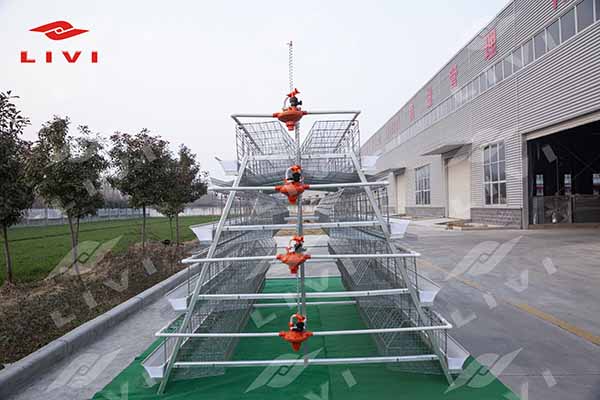
An H-Type Layer Cage system can be considered when vertical capacity and integrated automation are priorities. However, final cage quantity, tier count, row arrangement, ventilation equipment, and utility interfaces must be engineered from the actual Tanzania project inputs. The authorized Uganda design discussed below is a larger planning reference; it is not a completed Tanzania project and does not establish a final configuration for 30,000 layers.
Project Solution at a Glance
| Planning item | Current decision position |
|---|---|
| Target market | Tanzania |
| Target flock | 30,000 layers |
| Production system to assess | H-Type Layer Cage system or an alternative configuration suited to site conditions |
| Equipment platform | LIVI H1200 stacked layer equipment |
| Core automation scope | Automatic Feeding, Drinking System, Automatic Egg Collection, Automatic Manure Removal, Automatic Ventilation, and Climate Control System options |
| Critical site inputs | Land, house plan, water, electricity, backup power, feed route, egg route, manure route, and operating plan |
| Final engineering status | To be confirmed from project-specific inputs |
Why Site-First System Selection Matters for a 30,000-Layer Tanzania Project
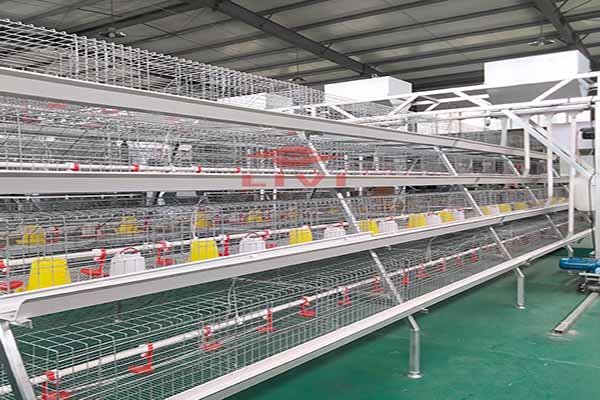
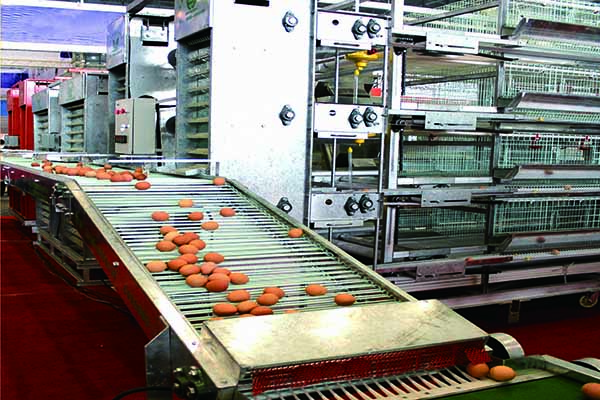
An H-Type Layer Cage system supports vertically organized layer production and can integrate Automatic Feeding, a Drinking System, Automatic Egg Collection, and Automatic Manure Removal. This approach is relevant where the buyer seeks an organized production flow across cage lines rather than separate manual routines.
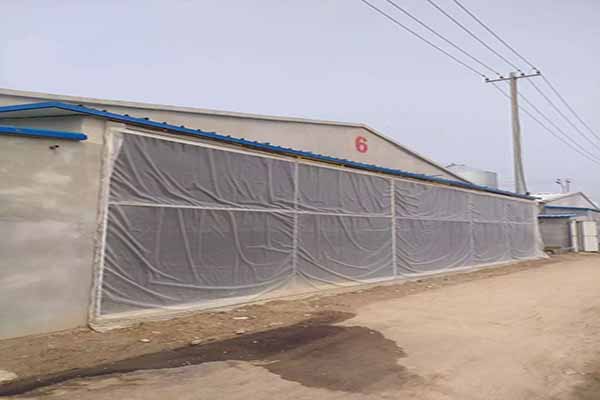
The choice is not automatic. A higher-automation configuration depends on a coordinated house design, reliable water supply, power continuity, ventilation planning, maintenance access, and trained daily operation. Environmental Control must be selected from actual house dimensions, local climate inputs, airflow requirements, and the intended management approach—not from bird quantity alone.
An A-Type configuration may also deserve assessment when land availability, investment priorities, labor availability, and automation requirements differ. Neither A-Type nor H-Type is universally preferable. The suitable choice must match the building, operational workflow, and future expansion plan.
Reserve space should be considered for feed storage, egg handling, manure collection, utilities, and potential future poultry houses. These decisions are easier to coordinate before civil works and equipment dispatch than after installation begins.
Verified LIVI H1200 Equipment Details to Review During Final Engineering
The following are verified equipment details for LIVI H1200 stacked layer equipment and listed components. They are equipment information only. Final quantities and system compatibility must be confirmed against the approved poultry-house layout and operating plan.
| Equipment item | Verified specification or feature | Planning relevance for a 30,000-layer Tanzania project |
|---|---|---|
| LIVI H1200 stacked layer equipment | LIVI equipment for layers; stacked, high-automation configuration | Evaluate as an H-Type layer equipment platform; capacity, tier count, and footprint require final engineering. |
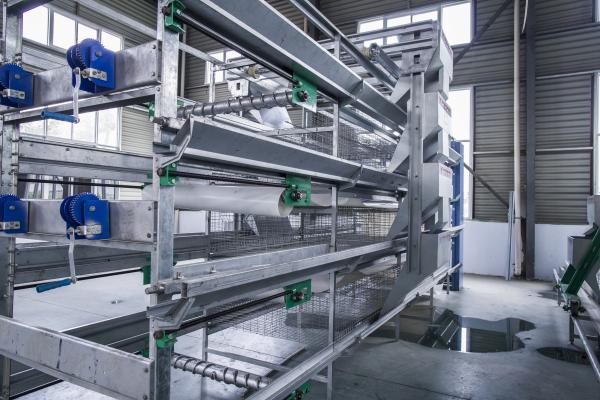
| Cage mesh | Q235 mesh; hot-dip galvanized surface treatment; 2.3mm bottom, side, and partition mesh wire; 4.0mm door wire; 2.5mm support wire; 25mm bottom-mesh spacing; 7° floor slope | Review cage structure and egg-roll path together with the selected layout and egg collection route. |
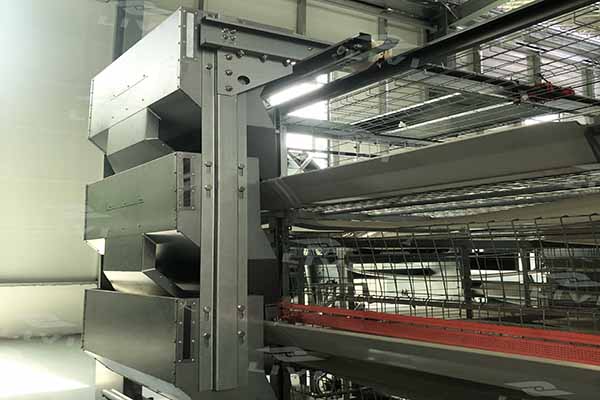
| Feed trough | Zinc-aluminum-magnesium alloy; one-piece forming; 1.0mm thickness | Review as part of the Feeding System interface and feed distribution plan. |
| Traveling feeder | Zinc-aluminum-magnesium alloy plus hot-dip galvanized material; 3.0mm frame thickness; 1.0mm hopper thickness; 0.75kw motor | Confirm line arrangement, power interface, and feed transfer route. |
| Horizontal/inclined feed auger | 3.0mm PVC outer pipe wall; 110mm outer-pipe diameter; 1.1kw motor | Confirm feed-storage location and horizontal/inclined conveying route. |
| Manure-belt main frame | Zinc-aluminum-magnesium alloy; 3.0mm thickness | Confirm manure discharge direction, collection point, and maintenance access. |
Automation Configuration: Plan the Interfaces Together
A coordinated scope for an automatic poultry farm in Tanzania may include Automatic Feeding, a Drinking System, Automatic Egg Collection, Automatic Manure Removal, Automatic Ventilation, and a Climate Control System. These systems should be planned as connected operating routes:
- Feed storage and feed conveying to the cage lines.
- Water source, filtration or treatment arrangements where needed, pressure control, and drinking-line access.
- Egg movement from cages to the planned egg-handling area.
- Manure movement from cage lines to the designated outside collection area.
- Ventilation, cooling, air inlets, sensors, controls, alarms, and emergency response arrangements.
- Electrical controls and a backup-power arrangement suitable for the final project.
The ventilation and cooling selection must account for the actual house plan and local environmental conditions. Automated cages, feeding, water supply, egg collection, and ventilation rely on electricity, so backup power and emergency procedures should be included in the operating plan.
Reference Design: What the Uganda 50,400-Layer Plan Can and Cannot Tell Tanzania Buyers
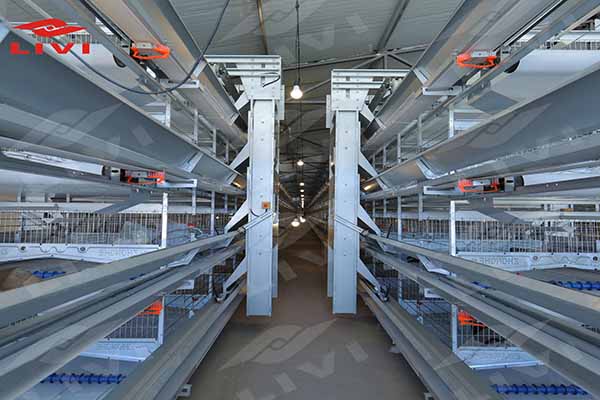
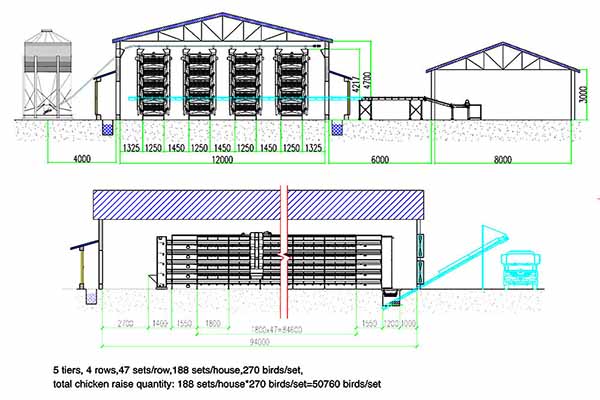
The supplied Uganda reference design proposes one approximately 95 × 15 × 5 m house with 280 five-tier, two-door H-Type Layer Cage sets. It uses four rows of 70 sets and has an installed capacity of 50,400 layers. Its integrated scope includes Automatic Feeding, nipple drinking, longitudinal and central egg collection, belt manure removal, fans, cooling pads, air inlets, and an environmental controller.

This reference demonstrates why cage rows, feed delivery, egg routes, manure routes, environmental control, and maintenance space must be coordinated as one system. It cannot determine the Tanzania poultry-house dimensions, cage count, row arrangement, equipment quantities, utility capacity, or business outcome for a 30,000-layer project.
Transport and Site-Access Checks Before Equipment Dispatch
LIVI can provide cross-border delivery and packing/shipping support. Dispatch should follow final engineering approval and confirmation that the site is ready to receive and install the equipment.
Before dispatch, the project team should:
- Approve the final equipment list, layout, and automation configuration.
- Verify access from the unloading point to the poultry-house work area.
- Prepare protected space to receive, stage, identify, and store delivered equipment.
- Coordinate civil works, building readiness, installation tools, local installation labor, and utility interfaces.
- Organize cage components, Feeding System items, Manure Removal System items, and electrical-control items against drawings and packing documentation.
Transport timing, import procedures, and local obligations should be confirmed with the buyer and relevant logistics parties for the specific project.
Implementation and Commissioning Sequence
- Confirm the target flock, land, proposed poultry-house information, utility conditions, and automation level.
- Prepare and approve the customized cage layout, equipment list, and interfaces for feed, water, egg handling, manure discharge, ventilation, and controls.
- Complete the poultry-house structure, access routes, work areas, and required utility connections according to the approved plan.
- Receive and check equipment against packing documentation and installation drawings.
- Install the H1200 Layer Cage structure and associated Feeding System, Drinking System, Manure Removal System, and egg-handling equipment according to the approved layout.
- Install and test the Ventilation System, Climate Control System, electrical interfaces, alarms, and selected backup-power arrangement.
- Commission each system in sequence, verify operating coordination, train designated personnel, and record maintenance responsibilities before stocking birds.
How LIVI Can Support Project Planning
LIVI has operated in the poultry industry since 2013. The supplied company profile states that LIVI has visited more than 1,000 large-scale poultry farms and has experience across different climates, site conditions, and project scales.
For a Tanzania layer project, LIVI can support project planning, customized solutions, preliminary poultry-house design, cage arrangement drawings, equipment quantity calculations, and automation configuration. The available service scope can also include equipment production, cross-border delivery support, installation and commissioning support, training, remote technical guidance, and after-sales technical support. On-site installation guidance is subject to project agreement.
FAQ
Can a 30,000-layer poultry farm in Tanzania use an H-Type Layer Cage system?
An H-Type Layer Cage system can be evaluated when the project prioritizes vertical capacity and integrated automation. The final system should be selected after confirming the poultry-house plan, utilities, ventilation approach, operating workflow, and maintenance capability.
How many H-Type Layer Cage sets are required for 30,000 layers?
The supplied information does not provide a verified cage capacity, tier configuration, or final layout for a 30,000-layer Tanzania project. LIVI should calculate final cage quantities only after the project-specific cage model, house dimensions, bird-management plan, and automation interfaces are confirmed.
Which automation systems should be planned together with the cages?
A coordinated scope may include Automatic Feeding, a Drinking System, Automatic Egg Collection, Automatic Manure Removal, Automatic Ventilation, and a Climate Control System. Equipment selection should also account for feed storage, water management, egg-room routing, manure collection, electrical controls, and emergency-power planning.
Why is backup power important for an automated poultry farm?
Automated cages, feeding, water supply, egg collection, and ventilation rely on electricity. A suitable backup generator and emergency response plan are recommended, while final capacity and installation details must be determined for the actual project.
What information is needed to prepare a customized quotation?
Provide the Tanzania project location, poultry type, target bird quantity, land dimensions, proposed house dimensions, preferred automation level, water and electricity conditions, and schedule. These inputs allow LIVI to prepare a project-specific layout, equipment configuration, and quotation.
Request a Customized Tanzania Layer Farm Layout
Planning a 30000 layers poultry farm solution in Tanzania? Send LIVI your project location, target flock, available land or poultry-house dimensions, preferred automation level, water and electrical conditions, and schedule. LIVI can use these inputs to prepare a customized layout, equipment configuration, and quotation rather than applying an unverified standard design.