


The modernization of poultry farming in Zambia is accelerating as commercial egg demand continues to increase across retail and wholesale markets. In response to this growth, a leading poultry investor partnered with LIVI Machinery to construct a high-capacity layer farm designed to house 80,000 laying hens using a fully automated cage management system.
This project reflects how engineering precision, durable materials, and automation integration can transform large-scale egg production into a highly efficient and stable business model.
Farm Development Objective
The investor’s primary goals were:
- Build an 80,000-bird commercial egg production facility
- Minimize long-term labor dependency
- Ensure structural durability for over 20 years
- Achieve high egg collection efficiency
- Optimize ventilation for Zambia’s warm environment
To achieve these objectives, LIVI Machinery designed a two-building layout with complete automation and high-density cage systems.
Poultry House Engineering Specifications
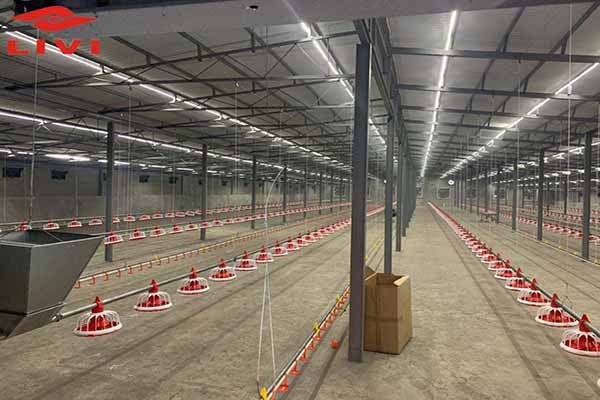
The farm consists of two environmentally controlled poultry houses, each accommodating 40,000 layers.
Structural Parameters Per House:
- Building Length: 102 meters
- Building Width: 15.5 meters
- Eave Height: 4.2 meters
- Roof Type: Double-slope insulated roof
- Wall System: Steel frame with ventilation curtain structure
- Foundation: Reinforced concrete base
Climate Control System:
- 24 units of 50-inch exhaust fans per house
- Evaporative cooling pads installed at air inlet
- Adjustable side air inlets
- Automatic temperature control cabinet
This ventilation system maintains stable airflow and controls heat stress, which is essential for consistent egg production in tropical regions.
Fully Automatic Cage Equipment Parameters
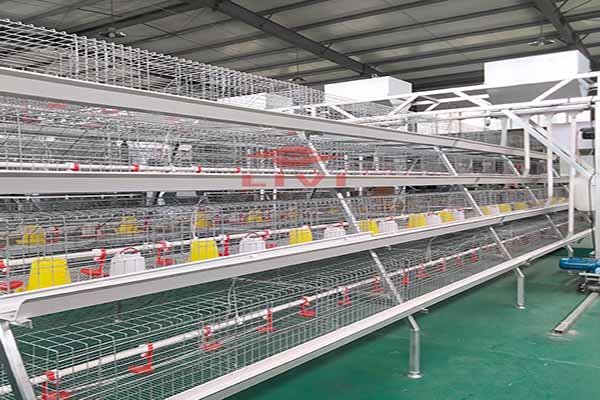
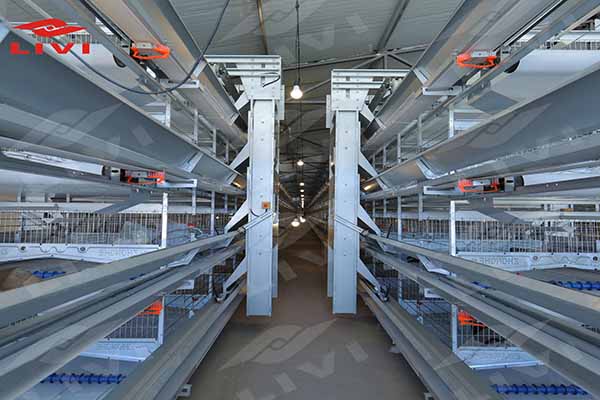
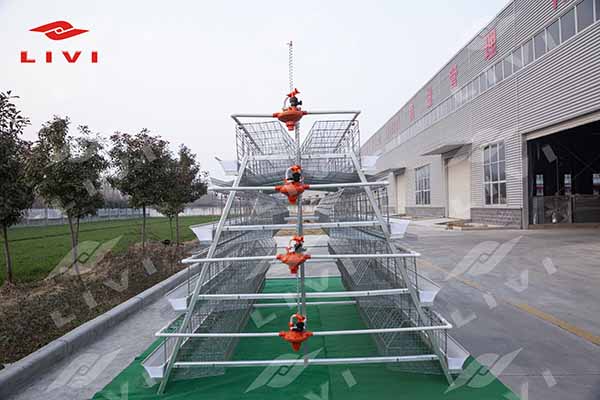
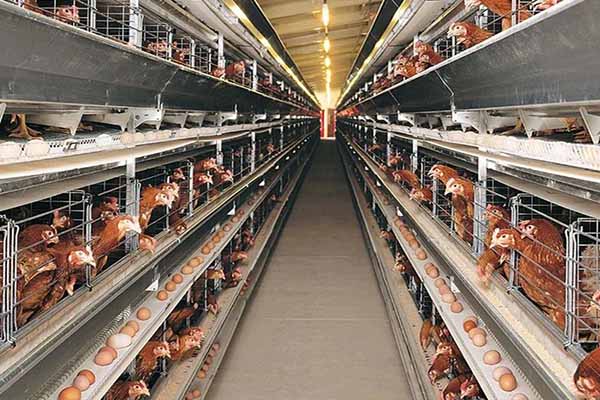
For this Zambia 80000 layers project, LIVI supplied a 4-tier H type fully automated layer cage system, engineered for intensive commercial farming.
Layout Configuration:
- Total Rows per House: 4 main rows
- Tiers: 4 levels
- Cage Width per Section: 600 mm
- Bird Capacity per Cage Compartment: 6–8 hens
- Total Capacity per House: 40,000 layers
Material & Technical Details:
- High-strength Q235 carbon steel framework
- Hot-dip galvanized coating thickness ≥ 275g/m²
- Corrosion-resistant lifespan estimated at 20+ years
- Reinforced cage door and locking system
- Anti-deformation cage mesh structure
The cage frame design enhances load-bearing capacity while ensuring sufficient airflow between tiers.
Integrated Automation Systems
To maximize efficiency, the following automation components were installed:
Automated Feeding Unit
- External feed silo storage system
- Main feed auger transmission line
- Horizontal feed trolley distribution
- Timed feeding controlled via electric panel
Feed delivery uniformity improves flock consistency and reduces manual feed waste.
Egg Collection Technology
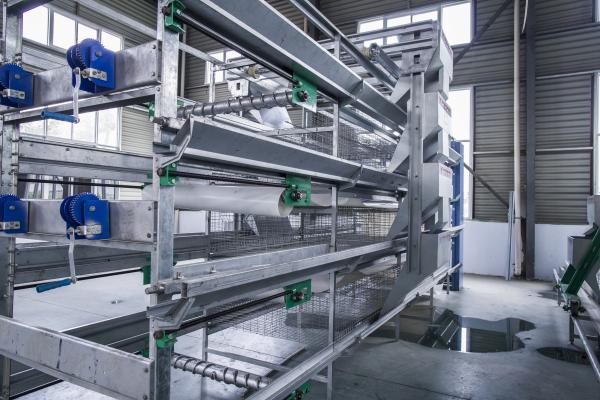
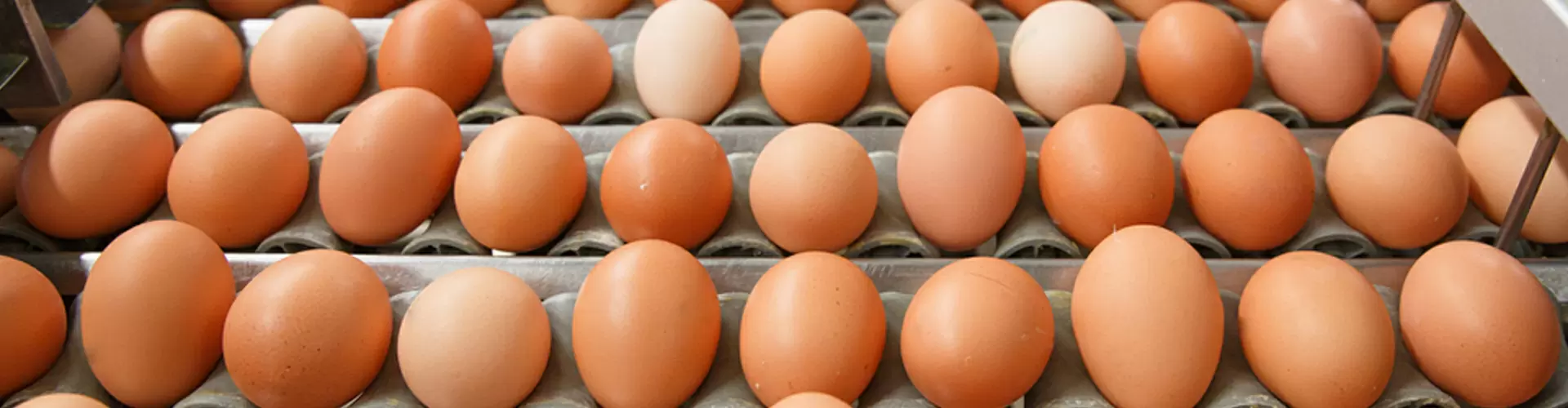
- Polypropylene egg belts on each tier
- Central longitudinal egg conveyor
- Egg transfer to grading and packing area
- Low-speed transport mechanism to reduce cracking
Egg breakage rate during collection is controlled below 1%, ensuring higher saleable yield.
Manure Management System
- High-durability manure belts
- Scheduled automatic manure removal
- External discharge area for composting
Regular manure discharge improves ammonia control and bird health stability.
Drinking System
- 360-degree stainless steel nipple drinkers
- Centralized water pressure regulator
- Anti-drip water cups
Water efficiency is improved while maintaining hygiene.
Operational Efficiency After Commissioning
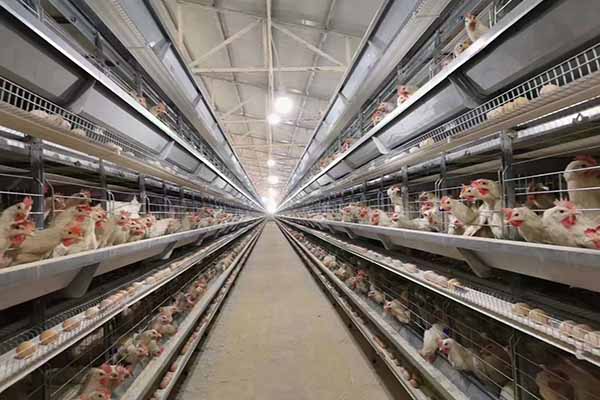
After installation and production startup, the Zambia project achieved:
- Peak laying performance: 91–93%
- Daily egg output: 72,800–74,400 eggs
- Feed consumption optimization: Controlled via automatic scheduling
- Mortality rate: Maintained below 3%
- Labor requirement: 12 total workers for entire 80,000-bird farm
Compared to traditional floor systems, labor demand decreased by approximately 65%, significantly lowering operational cost per egg.
Investment Performance
Due to high laying consistency and efficient management, the farm reached steady production within the first cycle. Based on regional egg market pricing, the investor anticipates full capital recovery within approximately 20–22 months, depending on feed cost fluctuations.
The durability of the hot-dip galvanized cage structure ensures that major equipment replacement costs will be minimal over the next two decades.
Project Significance
This 80000 layers poultry farm in Zambia represents:
- High-density commercial farming capability
- Climate-adapted engineering design
- Long-term structural durability
- Reduced labor dependency
- Stable large-scale egg production
It demonstrates how integrated cage systems and environmental control technology can provide sustainable growth for poultry enterprises in emerging markets.
About LIVI Machinery
LIVI Machinery focuses on providing automated poultry farming systems for commercial investors worldwide. From layout design to cage manufacturing and technical guidance, we support projects ranging from 20,000 to over 100,000 birds.
If you are planning to build a high-capacity poultry farm, our engineering team can provide customized solutions based on your production goals and local environmental conditions.
Contact LIVI Machinery to receive a professional farm layout proposal and detailed equipment quotation.